SME Insurance Coverage : A Guide for Protecting Your Small Business
Small and medium businesses are the backbone of the Indian economy. From manufacturing units and trading companies to IT firms, logistics businesses, retailers, restaurants, and professional service providers, SMEs operate across almost every industry. While these businesses focus on customers, employees, sales, and growth, many do not give enough attention to the risks that can affect their operations.
Purpose of business insurance is not simply to protect physical assets. A well planned SME insurance program can help protect property, employees, revenue, customers, business operations, and the company’s financial stability.
There is no single insurance policy that suits every SME. The right coverage depends on the nature of the business, its size, assets, employees, customers, contracts, locations, and the risks involved in its daily operations.
Why Do SMEs Need Insurance?
Many small business owners believe insurance is mainly required by large companies. In reality, an unexpected loss can affect a small business much more severely because it may have limited cash reserves and fewer resources to absorb a major financial shock.
Consider a manufacturing business that experiences a fire in its production unit. The immediate loss may include machinery, raw materials, finished goods, and building damage. However, the financial impact can continue even after the physical damage is assessed. Production may stop, customer orders may be delayed, employees still need to be paid, and the business may lose revenue during the recovery period.
Similarly, an IT company may not have expensive machinery or large physical assets, but it could face significant losses after a cyberattack, data breach, or professional negligence claim.
What Does SME Insurance Cover?
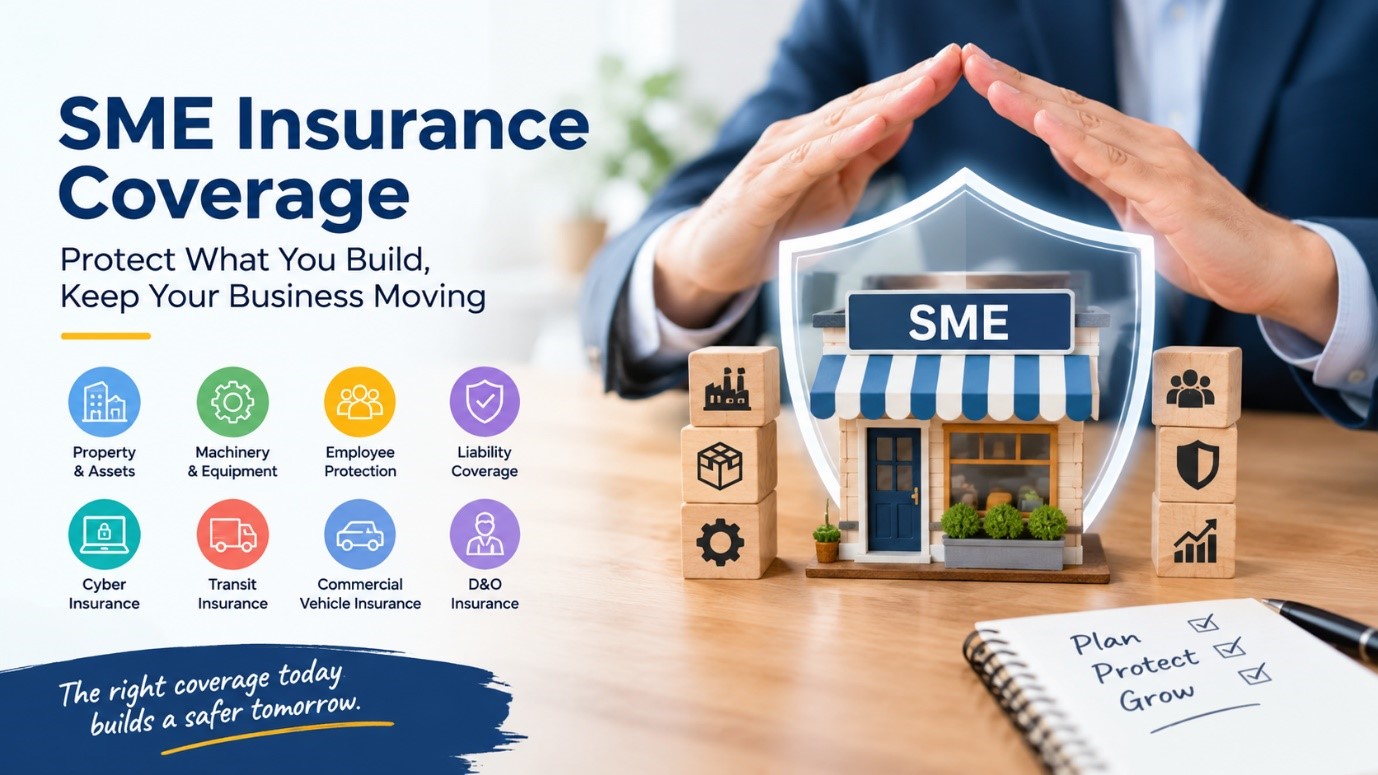
SME insurance can include several types of policies depending on the business. Some protect physical assets, while others protect against liability, employee related risks, cyber incidents, business interruption, or financial losses.
A business does not necessarily need every available insurance policy. The objective is to identify the risks that could seriously affect the business and build suitable protection around them.
Property and Fire Insurance
Property insurance is one of the basic forms of protection for businesses that own or occupy commercial premises. It can protect buildings, machinery, furniture, equipment, stock, and other business assets against covered events.
Fire is an obvious risk, but commercial property policies can be structured to cover a wider range of perils depending on the policy selected.
For example, a manufacturing SME may have several crores invested in machinery and inventory. If a major fire damages these assets, replacing them entirely from business cash flow may be difficult. Property insurance can help reduce the financial burden and support the recovery process.
Business Interruption Insurance
Business interruption insurance is designed to help businesses manage certain financial losses caused by an insured event that disrupts operations. Depending on the policy, it may help cover loss of profit and certain continuing expenses during the interruption period.
For example, if a factory stops production after a covered fire, the business may continue paying salaries, rent, loan obligations, and other fixed expenses even though revenue has fallen. Business interruption coverage can help manage eligible losses during the recovery period.
Employee and Group Health Insurance
Employees are an important part of every business. SMEs may consider group health insurance and other employee benefit programs to provide medical protection to their workforce.
Group health insurance can help employees manage hospitalisation and other covered medical expenses. A good employee benefits program can also help businesses attract and retain skilled employees.
The exact benefits and eligibility depend on the policy structure, insurer, and business requirements. SMEs should evaluate employee coverage based on workforce size, age profile, location, and business needs.
Workmen Compensation Insurance
Businesses with employees exposed to workplace risks should understand their obligations under applicable labour laws and consider appropriate employee accident and compensation protection.
Workmen compensation insurance can provide coverage for certain liabilities arising from workplace injuries or occupational accidents, subject to the applicable policy terms and legal requirements.
This can be particularly relevant for manufacturing units, construction companies, warehouses, logistics businesses, workshops, and other operations where employees face physical workplace hazards.
General Liability Insurance
Businesses interact with customers, vendors, visitors, contractors, and other third parties every day. An accident involving a third party can result in a financial claim against the business.
General liability insurance can help protect businesses against certain third party bodily injury or property damage claims arising from business operations, subject to policy terms.
For example, a customer visiting a commercial premises may suffer an injury due to an accident. If the customer makes a claim against the business, legal expenses and compensation can create a significant financial burden.
Product Liability Insurance
Manufacturers and businesses selling physical products face another important risk. A defective or unsafe product can cause injury or property damage to a customer or another third party.
Product liability insurance can protect businesses against certain claims arising from products they manufacture, sell, supply, or distribute.
This is particularly relevant for food businesses, pharmaceutical companies, chemical manufacturers, consumer product companies, automobile component manufacturers, and other businesses involved in physical products.
Professional Indemnity Insurance
Not every business sells physical products. Many SMEs provide professional advice, consultancy, technology services, design, accounting, engineering, legal, financial, or other specialised services.
A client may suffer a financial loss because of an alleged professional error, omission, negligence, or failure to deliver services as agreed.
Professional indemnity insurance can provide protection against certain professional liability claims, including eligible legal defence costs and other covered expenses.
Cyber Insurance
Digital dependency has created another major area of risk for SMEs. Businesses use email, cloud software, online payments, customer databases, accounting systems, websites, and other digital platforms every day.
A cyberattack can result in data theft, ransomware, business interruption, investigation expenses, legal costs, and other financial losses.
Cyber insurance can help businesses manage certain costs arising from covered cyber incidents. Depending on the policy, protection may include incident response, forensic investigation, data restoration, business interruption, liability, and other cyber related expenses.
Marine and Transit Insurance
SMEs involved in buying, selling, importing, exporting, or transporting goods may face financial losses while products are in transit.
Marine and transit insurance can provide protection for covered goods against specified risks during transportation, depending on the policy structure.
For example, a trading business importing expensive machinery may face a major loss if the shipment is damaged during transit. Without appropriate coverage, the business may have to absorb the loss or depend entirely on contractual recovery from another party.
Commercial Vehicle Insurance
Businesses that own or operate cars, trucks, vans, delivery vehicles, or other commercial vehicles need appropriate motor insurance.
Commercial vehicle insurance can provide protection against covered vehicle damage and third party liabilities, depending on the policy.
For logistics companies, distributors, retailers, and businesses with delivery operations, vehicles can be essential to daily revenue generation. A serious accident or vehicle loss can therefore create both direct and operational consequences.
Directors and Officers Insurance
Business owners and directors can also face personal exposure because of decisions taken while managing a company.
Directors and Officers insurance, commonly known as D&O insurance, can provide protection against certain claims made against directors and officers for alleged wrongful acts in their managerial capacity.
SME Insurance Checklist
- Assess your business risks and major financial exposures.
- Protect office, factory, stock, machinery and other assets.
- Consider Business Interruption cover for loss of income after insured damage.
- Protect employees with suitable employee benefit and accident covers.
- Consider liability covers for customer, product and professional risks.
- Review Cyber Insurance if your business handles digital data or online transactions.
- Cover goods during transportation with Marine/Transit Insurance.
- Review Commercial Vehicle Insurance for business vehicles.
- Check whether D&O Insurance is relevant to your company structure.
- Calculate the right sum insured based on actual business values.
- Understand exclusions, deductibles, waiting periods and policy conditions.
Final Thoughts
Running an SME involves taking calculated risks every day. Businesses invest in people, equipment, technology, inventory, customer relationships, and new opportunities to grow. A single unexpected event can put several of these investments under pressure at the same time.
SME insurance coverage helps businesses prepare for these situations. The right combination of property, business interruption, liability, employee, cyber, marine, motor, and other insurance covers can provide financial support when something goes wrong.