
Starting and running a small business takes effort, time, and money. Most business owners plan for growth. Fewer prepare for financial setbacks. A delayed payment, legal notice, equipment failure, cyber attack, or one unexpected incident can create pressure on cash flow and operations. The good news is that many business risks can be identified early and managed.
Here are 20 risks that can financially hurt a small business and why every business owner should understand them.
- Cash Flow Problems
Profit and cash flow are not the same. A business can show profits on paper and still struggle to pay salaries, rent, or vendors. Late customer payments and poor planning are common reasons.
What helps:
Track incoming and outgoing cash weekly.
2. Customer Payment Delays
Small businesses often depend heavily on a few clients. When payments are delayed, operations can slow down.
What helps:
• Clear payment terms
• Follow up schedules
• Advance billing where possible
3. Fire Damage
A fire can damage property, inventory, equipment, and business records. Recovery costs may become much larger than expected.
What helps:
Safety systems and appropriate insurance protection.
4. Theft and Burglary
Losses are not always dramatic. Small theft incidents repeated over time can create major financial impact.
What helps:
• Security systems
• Inventory controls
• Access restrictions
Small businesses are frequent targets because security controls may be limited.
Common risks include:
• Data theft
• Ransomware
• Email fraud
What helps:
Employee awareness and cyber protection.
6. Equipment Breakdown
Businesses often depend on machines, computers, or production systems. A sudden breakdown may stop operations completely.
What helps:
Preventive maintenance and contingency planning.
7. Business Interruption
Even when physical damage is limited, lost operating days can create financial pressure.
Examples:
• Power failures
• Natural disasters
• Supply issues
What helps:
Business continuity planning.
8. Legal Claims
A customer, vendor, employee, or partner can file a claim. Legal expenses alone can become expensive.
What helps:
Strong contracts and liability protection.
9. Employee Fraud
Internal risks are often overlooked.
Examples include:
• Expense manipulation
• Inventory theft
• Financial misuse
What helps:
Approval controls and audits.
10. Losing a Major Client
Many small businesses depend on a few customers. If one leaves, revenue can drop quickly.
What helps:
Build a broader customer base.
11. Supply Chain Disruptions
Raw materials or products arriving late can affect revenue.
Causes may include:
• Transport delays
• Vendor issues
• Global events
What helps:
Multiple supplier relationships.
12. Regulatory Penalties
Businesses must follow tax, labor, licensing, and industry rules. Missed compliance can result in penalties.
What helps:
Regular compliance reviews.
13. Employee Turnover
Replacing experienced employees costs more than most businesses expect.
Costs may include:
• Hiring
• Training
• Productivity loss
What helps:
Retention planning and structured onboarding.
14. Reputation Damage
Bad reviews or negative customer experiences spread quickly. Rebuilding trust often takes time and money.
What helps:
Fast response and service recovery.
15. Product Defects
A product issue can lead to returns, complaints, or liability costs.
What helps:
Quality checks before delivery.
16. Economic Slowdowns
Market demand changes. Customers may delay spending. Small businesses usually feel this pressure faster.
What helps:
Emergency reserves and flexible budgets.
17. Technology Failures
Software outages and system failures affect daily work.
Examples:
• Billing interruption
• Data loss
• Communication delays
What helps:
Backups and system monitoring.
18. Workplace Accidents
Employee injuries may lead to medical expenses and lost productivity.
What helps:
Safety training and workplace standards.
19. Inadequate Insurance Coverage
Many businesses discover coverage gaps only after a loss occurs. Underinsurance can increase out of pocket costs.
What helps:
Review policies annually.
20. No Emergency Fund
Unexpected expenses happen in every business. Without reserves, even small disruptions become difficult.
What helps:
Build a dedicated emergency fund.
How Small Businesses Can Reduce Financial Risk
Focus on four areas:
• Monitor cash flow regularly
• Diversify customers and suppliers
• Strengthen operations and controls
• Review insurance and risk plans annually
Final Thought
Business risk does not always arrive as a major disaster. Many financial problems start with small issues that stay unnoticed for too long. The businesses that survive long term are often the ones that prepare before problems appear. Managing risk is not about expecting the worst. It is about staying ready for normal business realities.
Get your free risk assessment today from our experts.
Introduction
Climate change is no longer a future concern for businesses. It is already affecting operations, supply chains, costs, and financial stability. Unseasonal rainfall delays shipments. Heatwaves reduce productivity. Flooding damages inventory. Water shortages interrupt manufacturing. Extreme weather events are becoming more frequent, and businesses across industries are feeling the impact. Many companies prepare for market risks and operational risks but overlook climate related financial exposure until losses appear.
Climate risk insurance helps businesses manage financial losses caused by climate related events and recover faster when disruptions happen. It has become an important part of business continuity planning for companies that depend on physical assets, logistics networks, agriculture, infrastructure, or weather sensitive operations.
This guide explains what climate risk insurance means, how it works, what it covers, and why businesses should start paying attention.
What Is Climate Risk Insurance?
Climate risk insurance is a type of risk protection designed to help businesses manage financial losses linked to climate related events.
These events may include:
• Flooding
• Cyclones
• Heatwaves
• Excess rainfall
• Drought conditions
• Storm damage
• Wildfires
• Climate driven supply chain disruption
Unlike traditional insurance that may focus only on physical damage, climate risk insurance looks at broader business impact.
For many companies, climate risk insurance works alongside existing property, business interruption, and liability coverage.
Why Climate Risk Matters More Than Ever for Businesses
Climate risk affects more than buildings and machinery. It affects how businesses earn revenue.
Examples include:
A manufacturer loses production because water shortages reduce operations.
An e-commerce company faces delayed deliveries due to severe flooding.
A retailer loses inventory because storage facilities become inaccessible.
A logistics company experiences route disruptions during extreme weather.
Even businesses with no direct environmental exposure may experience financial pressure through suppliers, customers, and infrastructure failures.
Climate risk is becoming a business risk.
Types of Climate Risks Businesses Face
Understanding climate exposure helps businesses choose the right protection.
Physical Climate Risk
This refers to direct damage caused by climate events.
Examples:
• Flood damage to warehouses
• Storm impact on office locations
• Heat damage to equipment
• Crop losses
• Infrastructure breakdown
Physical risk creates immediate financial loss.
Operational Climate Risk
This happens when business operations slow down or stop.
Examples:
• Employee productivity loss during extreme heat
• Utility interruptions
• Production delays
• Transport disruption
• Vendor shutdowns
Operational losses often continue after the weather event ends.
Supply Chain Climate Risk
Many businesses rely on suppliers across different regions.
Climate events affecting one supplier can impact multiple businesses.
Examples:
• Raw material shortages
• Port disruptions
• Delayed imports
• Inventory shortages
• Increased transportation costs
Supply chain exposure is becoming one of the fastest growing climate related business risks.
What Does Climate Risk Insurance Cover?
Coverage differs between insurers and industries, but climate risk insurance may include:
Property Damage
Protection for buildings, machinery, stock, and infrastructure damaged by covered climate events.
Business Interruption
Compensation for income loss when operations stop temporarily.
Supply Chain Disruption
Support for financial losses caused by climate related interruption from suppliers.
Recovery Costs
Expenses linked to restoring operations after an event.
Emergency Response Costs
Immediate actions required to reduce additional damage.
Businesses should review policy wording carefully because coverage conditions vary.
Which Businesses Should Consider Climate Risk Insurance?
Climate exposure affects almost every sector differently.
Businesses that commonly evaluate climate risk insurance include:
• Manufacturing companies
• Warehousing and logistics firms
• Agriculture businesses
• Retail chains
• Construction companies
• Hospitality businesses
• Food processing companies
• Renewable energy operators
• Infrastructure businesses
Even service businesses with large physical operations may have climate related exposure.
Business Scenarios
Scenario 1. Manufacturing Facility Faces Water Restrictions
A manufacturing company depends heavily on water intensive production. During prolonged water shortages, production capacity drops by 40 percent for several weeks. Revenue declines while fixed expenses continue. Climate risk insurance may help reduce financial disruption during operational interruption.
Scenario 2. Flooding Interrupts Distribution Network
A regional distributor experiences severe flooding near its warehouse. Inventory movement stops for ten days. Customer orders get delayed and emergency logistics costs increase. Climate risk coverage may support recovery and business continuity.
Scenario 3. Heatwave Impacts Workforce Productivity
A business operating large industrial facilities experiences reduced output because of extreme temperatures and safety restrictions. Lower productivity creates operational delays and contract pressure. Climate related protection can support resilience planning.
Benefits of Climate Risk Insurance for Businesses
Climate risk insurance offers more than financial compensation.
Key benefits include:
• Supports business continuity
• Protects cash flow
• Reduces recovery pressure
• Strengthens operational planning
• Improves investor confidence
• Supports long term resilience
Companies that prepare early often recover faster after disruption.
Common Mistakes Businesses Make
Businesses often underestimate climate exposure.
Common mistakes include:
• Assuming property insurance covers everything
• Ignoring supply chain dependency
• Not reviewing business interruption limits
• Underinsuring inventory values
• Treating climate events as rare incidents
• Delaying risk assessment
Climate risk management works best before disruption happens.
How Climate Risk Insurance Supports Long Term Growth
Businesses invest in growth plans, expansion, technology, and customer acquisition. Climate disruption can slow all of these efforts. Climate risk insurance helps companies move forward with stronger financial confidence. It allows leadership teams to focus on operations and growth while creating protection against increasingly unpredictable environmental conditions. Prepared businesses adapt faster.
Final Thoughts
Climate events are becoming a regular business consideration rather than occasional disruption. Every business depends on people, infrastructure, suppliers, and stable operations. Climate related events affect each of these areas differently.
Climate risk insurance helps businesses prepare for uncertainty and reduce financial shocks when disruptions happen. Insurance alone is not the solution. Strong planning, operational resilience, and the right protection strategy work together. Businesses that understand climate risk today are better positioned for tomorrow.
FAQs
Is climate risk insurance the same as property insurance?
No. Property insurance mainly protects physical assets. Climate risk insurance may also address operational and business interruption exposure.
Does climate risk insurance only apply to large companies?
No. Small and medium businesses can also face climate related losses and may benefit from protection.
Can climate risk insurance cover supply chain disruption?
Some policies may include coverage for climate related supply chain interruption depending on policy terms.
Which industries face the highest climate risk?
Manufacturing, logistics, agriculture, construction, hospitality, and retail often experience higher climate exposure.
How do businesses decide if climate risk insurance is necessary? Businesses should assess weather exposure, operational dependency, supplier concentration, and financial impact from disruption.
Introduction
Cyber insurance works differently from traditional insurance policies. Coverage depends on policy wording, security controls, disclosure accuracy, and how the business responds after an incident. A ransomware attack or data breach may still lead to claim disputes if the insurer finds gaps in cybersecurity practices or policy compliance.
For many companies, the biggest risk is not the attack itself. It is discovering too late that the policy does not respond as expected.
Understanding why cyber insurance claims get rejected in India helps businesses strengthen both cybersecurity and financial protection. It also helps companies avoid costly mistakes before an incident occurs.
Why Cyber Insurance Claims Get Rejected
Cyber insurance policies are built around risk assessment. Insurers evaluate how a business manages digital risk before offering coverage. Businesses that fail to maintain basic cybersecurity controls create higher claim exposure for insurers.
Many claim disputes happen because:
• Security controls were weaker than declared
• Reporting timelines were ignored
• Systems remained outdated
• Policy exclusions were misunderstood
• Important risks were not disclosed properly
Cyber insurance is not designed to replace cybersecurity discipline. It supports recovery when reasonable security measures already exist.
Weak Passwords and No Multi Factor Authentication
One of the most common reasons for cyber insurance claim disputes involves poor access control practices.
Many businesses still rely on:
• Shared admin credentials
• Weak passwords
• Reused passwords across systems
• Disabled multi factor authentication
Attackers frequently exploit leaked credentials from phishing attacks or previous data breaches. Once access is gained, attackers move across payment systems, email accounts, and cloud platforms.
Delayed Incident Reporting
Time matters during cyber incidents. Delayed reporting often worsens financial damage and affects forensic investigation quality.
In India, CERT In guidelines require certain cyber incidents to be reported within specific timelines. Many cyber insurance policies also require immediate or urgent notification to insurers after discovering an attack.
Businesses sometimes delay reporting because:
• Internal teams try solving the issue alone
• Leadership fears reputational damage
• The incident initially appears minor
• Evidence gets overlooked during panic response
This delay can create serious claim complications.
Why Delayed Reporting Creates Problems
Delayed reporting may:
• Destroy forensic evidence
• Increase financial losses
• Prevent containment efforts
• Make root cause analysis difficult
• Violate policy conditions
Insurers may reduce or deny claims if they believe earlier reporting could have reduced damage.
Unpatched Software and Known Vulnerabilities
Cybercriminals actively target outdated systems. Many attacks exploit vulnerabilities that already have publicly available security patches.
Common examples include:
• Outdated VPN software
• Unsupported operating systems
• Unpatched firewalls
• Old ecommerce plugins
• Expired endpoint security tools
Employee Negligence and Social Engineering Fraud
Human error remains one of the biggest cybersecurity risks for businesses.
Attackers often use:
• Phishing emails
• Fake invoices
• CEO impersonation scams
• Fraudulent payment requests
• Malware infected attachments
Many businesses assume cyber insurance automatically covers all employee mistakes. That is not always true.
Some policies:
• Exclude certain social engineering losses
• Apply sub limits for fraud claims
• Require verification procedures for fund transfers
Misrepresentation During Policy Purchase
Cyber insurance proposal forms require detailed information about security controls and past incidents. Some businesses provide inaccurate answers to improve approval chances or reduce premiums.
Common disclosure mistakes include:
• Hiding previous cyber incidents
• Overstating cybersecurity maturity
• Claiming security tools are active when they are not
• Misrepresenting backup systems
• Providing incomplete infrastructure details
If insurers discover incorrect disclosures during a claim investigation, they may reject coverage entirely.
Why Accurate Disclosure Matters
Cyber insurance depends heavily on trust during underwriting. Insurers calculate premiums based on declared risk controls.
Even unintentional misstatements can create serious disputes later.
Businesses should treat proposal forms as legal risk documents, not simple paperwork.
Failure to Maintain Secure Backups
Ransomware attacks often target backup systems first. Businesses without secure and tested backups face longer downtime and higher recovery costs.
Many companies assume backups exist because files sync automatically to cloud platforms. During incidents, they discover:
• Backups were corrupted
• Recovery systems failed
• Backup access was compromised
• Restoration testing never occurred
Third Party Vendor and Cloud Service Gaps
Modern businesses depend on multiple external providers.
These include:
• Cloud hosting companies
• SaaS platforms
• Payment gateways
• Managed IT vendors
• CRM providers
A cyber incident affecting a third party vendor can still disrupt your operations directly.
However, not all cyber insurance policies automatically cover:
• Vendor related outages
• Cloud platform failures
• External service provider breaches
• Contractual liabilities involving vendors
Businesses often assume third party risk is fully covered without reviewing policy wording carefully.
This creates exposure for:
• Ecommerce businesses
• SaaS startups
• Fintech firms
• Digital agencies
• Remote operations dependent on cloud infrastructure
War and Nation State Attack Exclusions
Some cyber insurance policies contain exclusions related to cyber warfare or nation state attacks.
This area remains legally complex because attribution is difficult. Insurers may investigate whether an attack connects to organized geopolitical activity.
While this exclusion does not affect most routine cyber incidents, businesses should still understand:
• Policy wording
• Attribution clauses
• Exclusion scope
• Applicable sub limits
Large scale global malware attacks have already triggered disputes internationally over cyber war exclusions.
How Businesses Can Improve Cyber Insurance Claim Success
Businesses improve claim outcomes by combining cybersecurity discipline with proper policy management.
Practical Cyber Readiness Checklist
• Enable multi factor authentication across critical systems
• Maintain documented cybersecurity policies
• Patch software and systems regularly
• Conduct employee phishing awareness training
• Maintain secure and tested backups
• Create a formal incident response plan
• Monitor third party vendor risks
• Report incidents quickly to insurers and regulators
• Review cyber insurance wording annually
• Disclose risks honestly during underwriting
Cyber insurance works best when supported by strong operational controls.
What Businesses Should Check Before Buying Cyber Insurance
Many companies compare premiums without reviewing coverage conditions carefully. This creates major surprises during claims.
Before purchasing cyber insurance, businesses should review:
• Policy exclusions
• Ransomware sub limits
• Social engineering fraud coverage
• Business interruption wording
• Vendor related coverage
• Regulatory fine coverage
• Incident reporting timelines
• Forensic investigation support
• Retroactive dates
• Claim response services
Policy wording matters more than marketing brochures.
Why Policy Review Matters
Cyber risk changes quickly. Businesses adopt new software, expand remote operations, onboard vendors, and collect more customer data over time.
A cyber insurance policy purchased two years ago may no longer match current operational exposure.
Regular policy reviews help businesses:
• Identify coverage gaps
• Adjust limits
• Align coverage with business growth
• Improve underwriting outcomes
• Reduce claim disputes
At Mialtus Insurance Broking Pvt. Ltd., cyber insurance discussions focus on practical business exposure instead of generic policy comparison. Understanding exclusions, operational dependencies, and reporting obligations helps businesses build stronger financial protection against evolving cyber threats.
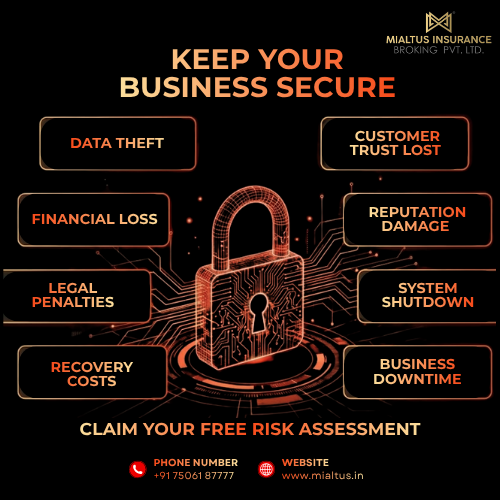
In today’s business environment, cyber threats are no longer limited to large corporations or global technology companies. Every business that stores customer data, processes online payments, uses cloud systems, or depends on digital operations faces cyber risk every single day.
A single cyberattack can interrupt operations, damage customer trust, and create financial pressure that takes years to recover from. Many businesses assume they are too small to become a target. In reality, attackers often focus on small and medium businesses because they usually have weaker security systems and limited recovery plans.
At Mialtus Insurance Broking Pvt. Ltd., we work closely with businesses that want to protect their operations from unexpected risks. Cybersecurity is no longer only an IT concern. It is a business survival strategy.
The digital world creates opportunities for growth, but it also creates exposure. Understanding these risks is the first step toward building a secure business.
Data Theft Can Destroy Business Confidence
Customer information is one of the most valuable assets any business owns. This includes financial records, employee details, passwords, payment information, and confidential business data. When hackers gain access to this information, the consequences can be severe. Data theft can lead to financial fraud, identity theft, and misuse of sensitive records. Customers lose confidence quickly when they discover their information has been compromised.
For many businesses, rebuilding trust after a data breach is far more difficult than restoring systems. Clients expect companies to protect their personal information. One incident can permanently affect long term relationships. Cybercriminals use phishing emails, malware, ransomware, and weak passwords to gain access to company systems. Even a small mistake by an employee can open the door to a serious attack.
Financial Loss Is Often Bigger Than Expected
Most businesses think cyberattacks only result in temporary disruption. The actual financial impact is often much larger.
A cyber incident can create expenses such as:
• System repair costs
• Data recovery expenses
• Business interruption losses
• Legal fees
• Customer compensation
• Regulatory penalties
• Public relations management
Many companies underestimate how quickly these costs add up. Even a few hours of downtime can affect revenue, customer service, and operations.
For businesses that rely heavily on digital platforms, the financial impact becomes even more serious. E commerce companies, healthcare providers, financial firms, logistics companies, and service businesses all face high exposure to cyber threats. Without proper protection and risk planning, a single incident can create long term financial strain.
Legal Penalties Are Increasing
Governments and regulators across the world are becoming stricter about data privacy and cybersecurity compliance. Businesses are now expected to protect customer information responsibly. Failure to do so may result in legal action, penalties, or regulatory investigations.
If customer data is leaked due to poor cybersecurity practices, companies may face lawsuits or fines. In many cases, businesses are also required to notify affected customers and authorities within a specific time period. This creates additional pressure during an already stressful situation.
Cybersecurity is no longer optional compliance. It has become a legal responsibility for businesses handling sensitive information.
Customer Trust Takes Years to Build
Trust is one of the most valuable assets any business can have. Customers choose companies they believe are secure, reliable, and responsible. When a cyberattack occurs, customers often question whether their information is safe. Even businesses with strong reputations can experience customer loss after a major breach.
Negative reviews, social media discussions, and public news coverage can spread quickly. A damaged reputation can reduce future sales and weaken customer loyalty. In competitive industries, trust directly affects growth. Businesses that fail to protect customer information may struggle to regain confidence in the market.
case study : In 2021, Air India suffered a major cyberattack that exposed personal data of nearly 45 lakh passengers, including passport details and contact information. The incident raised serious concerns among customers about data safety and privacy. Air India had to strengthen its cybersecurity measures and reassure customers to rebuild confidence after the breach.
Reputation Damage Can Impact Future Growth
Cyberattacks affect more than technology systems. They also affect how the market views your business. Partners, vendors, investors, and customers may hesitate to work with a company that has experienced a serious security breach.
A damaged reputation can lead to:
• Loss of clients
• Reduced business opportunities
• Delayed partnerships
• Negative media attention
• Lower customer retention
For growing businesses, reputation plays a major role in expansion. A single incident can create long lasting business consequences beyond immediate financial loss. Protecting your digital infrastructure also protects your brand image.
Case study : Indian online grocery platform BigBasket faced a major data breach where customer information was reportedly leaked on the dark web. The incident created concern among users about data security and impacted public perception of the brand’s digital safety standards. Cybersecurity incidents like these show how reputation damage can affect customer trust and future business growth.
System Shutdowns Disrupt Operations
Many cyberattacks are designed to stop business operations completely. Ransomware attacks, for example, can lock systems and prevent employees from accessing important files or software. Businesses may lose access to emails, accounting systems, customer databases, and communication platforms.
When systems stop working, productivity drops immediately. In some industries, even short disruptions can create major operational problems. Manufacturing delays, missed customer orders, interrupted services, and supply chain issues can all result from cyber incidents. Every hour of downtime affects revenue and customer experience.
Recovery Costs Continue After the Attack
Recovering from a cyberattack is often a long and expensive process. Businesses may need to hire cybersecurity experts, replace hardware, restore backups, strengthen systems, and retrain employees. Some companies also invest heavily in rebuilding customer confidence through marketing and public communication efforts.
Recovery does not end when systems restart. The effects can continue for months or even years. This is why proactive risk management is far more effective than reactive recovery.
Business Downtime Affects Long Term Stability
Downtime is one of the most underestimated cyber risks. When operations stop, businesses lose productivity, customer confidence, and revenue. Employees cannot work efficiently, customer support slows down, and service delivery gets affected.
For businesses operating in competitive markets, customers may quickly move to alternative providers. A well prepared cyber risk strategy helps businesses reduce downtime and recover faster after an incident.
Why Businesses Need Cyber Risk Protection
Cybersecurity is not only about installing antivirus software or creating passwords. It requires a complete risk management approach.
Businesses need:
• Employee awareness training
• Secure data backup systems
• Network protection
• Incident response planning
• Regular security updates
• Cyber insurance support
Cyber insurance has become an important layer of protection for modern businesses. It helps businesses manage financial losses, recovery expenses, legal liabilities, and operational disruptions after cyber incidents.
At Mialtus Insurance Broking Pvt. Ltd., we help businesses understand their cyber exposure and identify suitable protection solutions based on their industry and operational risks.
Final Thoughts
Cyber threats are evolving every day. Businesses that ignore cyber risk place their operations, reputation, and customer trust at risk. The cost of prevention is always lower than the cost of recovery. A strong cybersecurity strategy combined with proper risk protection helps businesses stay prepared, resilient, and confident in a digital world. Your business deserves protection beyond traditional insurance. Cyber risk management is now a critical part of long term business security.
Protect Your Business with Mialtus Insurance Broking Pvt. Ltd.
At Mialtus Insurance Broking Pvt. Ltd., we understand that cyber threats can affect businesses of every size and industry. Our team helps you identify potential cyber risks and choose protection. If you want to secure your business against growing digital threats, connect with Mialtus Insurance Broking Pvt. Ltd. today and take the first step toward smarter cyber risk protection.
Introduction
Manufacturing businesses operate in a high-risk environment. You deal with heavy machinery, large inventories, skilled labor, and complex supply chains. One unexpected event can disrupt operations and cause major financial loss.
Manufacturing insurance is a combination of policies designed to protect factories and industrial units from risks such as fire, equipment breakdown, liability claims, and business interruptions. It is not a single policy. It is a structured risk protection strategy tailored to your operations.
If you run a factory or manage an MSME, insurance is not optional. It is a core part of financial stability and long-term growth.
Key Risks in the Manufacturing Industry
Manufacturing units face multiple risks daily. Understanding these risks helps you choose the right coverage.
Machinery Breakdown
Machines are the backbone of production. A breakdown can stop operations instantly.
Example:
A CNC machine failure in an auto parts factory can halt production for days. Repair costs plus lost revenue can be significant.
Factories store raw materials, chemicals, and finished goods. Fire risk is always present.
Common causes:
- Electrical faults
- Chemical reactions
- Human error
A single fire incident can destroy inventory and infrastructure.
Manufacturing involves manual labor and hazardous environments.
Risks include:
- Machine-related injuries
- Falls and burns
- Exposure to chemicals
This creates both legal liability and compensation costs.
Product Defects
If your product fails or causes harm, you can face legal claims.
Example:
A defective electrical component causing fire damage can result in lawsuits and brand damage.
This is where product liability insurance India becomes essential.
Supply Chain Disruption
Manufacturing depends on timely supply and delivery.
Risks:
- Supplier failure
- Transport delays
- Natural disasters
Even a short disruption can impact revenue and customer commitments.
Cyber Risks
Modern factories use automation and connected systems.
Threats include:
- Data breaches
- Ransomware attacks
- Production system hacking
Cyber risks are increasing, even for small manufacturers.
Types of Manufacturing Insurance
A strong insurance strategy combines multiple policies. Each one protects a specific area of your business.
Property Insurance for Factories
This covers physical assets such as:
- Factory building
- Machinery
- Inventory
It protects against:
- Fire
- Natural disasters
- Theft
This is the foundation of factory insurance.
General Liability Insurance
This protects your business from third-party claims.
Covers:
- Bodily injury
- Property damage
Example:
A visitor gets injured inside your factory. This policy covers legal and compensation costs.
Workers Compensation Insurance
This is essential for employee protection.
Covers:
- Medical expenses
- Disability compensation
- Loss of wages
It also ensures compliance with labor laws.
Business Interruption Insurance
This covers loss of income due to operational shutdown.
Triggers include:
- Fire damage
- Machinery failure
- Natural disasters
It helps you pay:
- Fixed expenses
- Salaries
- Rent
Without this, even a temporary shutdown can cause long-term damage.
Product Liability Insurance
This protects you against claims related to product defects.
Covers:
- Legal costs
- Compensation claims
This is critical for exporters and manufacturers dealing with consumer goods.
Machinery Breakdown Insurance
This specifically covers sudden mechanical or electrical failure.
Covers:
- Repair or replacement costs
- Damage due to internal faults
It is different from property insurance, which mainly covers external events.
This protects goods during transportation.
Covers:
- Damage during transit
- Theft
- Accidents
Important for manufacturers with large distribution networks.
Cyber Insurance
This protects digital systems and data.
Covers:
- Data breach costs
- Recovery expenses
- Legal liabilities
Even small factories using ERP systems need this.
Environmental Liability Insurance
Manufacturing units can cause environmental damage.
Covers:
- Pollution-related claims
- Cleanup costs
- Legal liabilities
Critical for industries dealing with chemicals or waste.
Why Different Industries Need Different Insurance
Insurance is not one-size-fits-all. Each manufacturing sector has unique risks.
Food Industry
- Risk of contamination
- Strict safety regulations
- Need strong product liability cover
Chemical Industry
- High fire and explosion risk
- Environmental damage exposure
- Needs environmental liability insurance
Textile Industry
- Fire risk due to flammable materials
- Machinery wear and tear
- Needs property and machinery insurance
Automobile Manufacturing
- Complex machinery
- High-value equipment
- Requires breakdown and liability coverage
Electronics Manufacturing
- Sensitive equipment
- High cyber risk
- Needs cyber and equipment insurance
How to Choose the Right Insurance
Choosing the right industrial insurance coverage requires planning.
Assess Your Risks
Start by identifying:
- Operational risks
- Financial exposure
- Industry-specific threats
Do not rely on generic policies.
Understand Your Business Size
Coverage needs differ based on:
- Small factory vs large plant
- Revenue scale
- Workforce size
Larger operations need broader coverage and higher limits.
Match Insurance with Industry Type
Each sector has different exposure.
Example:
- Chemical plants need environmental cover
- Food units need product liability
Check Policy Coverage Details
Focus on:
- Inclusions
- Exclusions
- Claim process
Do not choose based only on premium.
Common Mistakes Manufacturers Make
Many businesses buy insurance but still remain under-protected.
Avoid these mistakes:
Underinsuring Assets
Many factories insure assets below actual value.
Result:
Lower claim payout during loss.
Ignoring Business Interruption
Most manufacturers focus only on physical damage.
They ignore income loss during downtime.
Buying Generic Policies
Standard policies do not cover industry-specific risks.
Customization is necessary.
Not Updating Coverage
Businesses grow, but insurance remains unchanged.
Update policies regularly based on expansion.
Ignoring Cyber Risk
Even small factories face cyber threats today.
Lack of cyber insurance can be costly.
Conclusion
Manufacturing businesses operate in a risk-heavy environment. A single incident can impact production, finances, and reputation. This is why manufacturing insurance must be approached strategically. You need more than basic coverage. You need a customized mix of policies aligned with your industry, scale, and risk exposure. The right insurance plan protects your assets, supports business continuity, and builds long-term resilience.
Introduction: Don’t Wait for a Fire to Understand Your Insurance
A short circuit in a warehouse. A small fire in a shop. A factory machine overheating. In India, such incidents are more common than most business owners expect and the financial impact can be devastating. For many MSMEs and even large enterprises, a single fire accident can halt operations for weeks or permanently.
This is why a Standard Fire and Special Perils (SFSP) Policy is not just optional it’s essential for business continuity. But here’s the reality: many businesses are underinsured or wrongly insured.
What is Fire Insurance (SFSP) for Businesses?
For Indian businesses, a fire insurance policy is designed to protect physical assets from damage caused by fire and several other risks.
It typically covers:
- Factory buildings and office premises
- Plant and machinery
- Stock and raw materials
- Furniture, fixtures, and fittings
In simple terms, it ensures that if your business suffers physical damage, the insurer compensates the loss helping you recover and restart operations.
What Does Fire Insurance Actually Cover?
Most business owners assume it only covers fire but it’s much broader.
🔹 Fire & Lightning
Covers actual fire incidents and lightning-related damage.
🔹 Natural Disasters (Common in India)
Includes:
- Floods (especially in cities like Mumbai, Chennai)
- Cyclones (coastal regions)
- Storms and heavy rainfall
🔹 Business Environment Risks
Covers:
- Riots and strikes
- Malicious damage
- Aircraft-related damage
🔹 Water Damage
Damage due to:
- Burst pipes
- Overflowing tanks
- Sprinkler leakage
🔹 Geological Risks
Includes landslides and subsidence (important for hilly or construction-prone areas).
🔹 Impact Damage
Damage caused by third-party vehicles (e.g., a truck hitting your warehouse).
👉 This makes SFSP a multi-risk protection policy, not just fire insurance.
The Hidden Exclusions That Affect Indian Businesses
This is where many claims get rejected.
❌ Intentional Acts (Arson)
If the fire is deliberate, the insurer will reject the claim.
❌ War & Nuclear Risks
Losses due to war or nuclear events are completely excluded.
❌ Spontaneous Combustion
Very important for industries like:
- Textile
- Chemical
- Agriculture
If goods catch fire due to internal heating, it may not be covered unless specifically added.
❌ Theft During Fire
If stock is stolen during a fire incident, it is not covered under a fire policy.
❌ Business Loss (Very Important)
Loss of:
- Profit
- Production
- Customers
❌ Not covered under standard fire insurance.
👉 This is a major gap for businesses.
The Most Misunderstood Rule: Electrical Equipment Damage
This is where many Indian businesses face confusion.
- If a machine fails due to short circuit → ❌ Not covered
- If that failure causes a fire → ✅ Fire damage is covered
Example:
A CNC machine in a factory gets damaged due to voltage fluctuation. The machine damage may not be claimable but if it causes a fire that spreads, the building and stock damage will be covered.
👉 Solution: Take Machinery Breakdown Insurance along with fire insurance.
Situations That Can Lead to Claim Rejection
Even if you have a policy, these situations can create problems:
⚠️ Unoccupied Premises
If your factory/shop is closed for 30–60 days without informing the insurer, your claim can be denied.
⚠️ Underinsurance
If you insure your property for less than its actual value, the insurer may apply the average clause and reduce your claim.
⚠️ Non-Disclosure
Incorrect business details (like type of goods stored) can invalidate your claim.
Add-ons Every Indian Business Should Consider
A basic policy is not enough for most businesses.
➕ Earthquake Cover
Important in seismic zones (like Delhi, Gujarat, North-East).
➕ Spontaneous Combustion Cover
Critical for industries handling heat-sensitive materials.
➕ Debris Removal
Covers clean up costs after fire damage.
➕ Professional Fees
Covers engineers, architects, and consultants.
➕ Business Interruption Insurance (FLOP)
One of the most important add-ons covers:
- Loss of profit
- Fixed expenses
- Salary payments during downtime
Who Needs Fire Insurance the Most?
In India, this policy is essential for:
- MSMEs and small shop owners
- Factory and manufacturing units
- Warehouses and logistics businesses
- Retail stores and showrooms
- Offices with expensive equipment
👉 If your business depends on physical assets, you need this protection.
Common Mistakes Indian Business Owners Make
Avoid these to prevent losses:
- Taking insurance just to satisfy bank requirements
- Not updating stock values regularly
- Ignoring add-ons to save premium
- Not reading exclusions
- Assuming all fire-related losses are covered
These mistakes often result in partial or rejected claims.
Conclusion:
Fire insurance is one of the most important safeguards for any business in India. But its real value lies in understanding what is covered and what is not.
Before relying on your policy:
- Check your sum insured
- Review exclusions carefully
- Add necessary extensions
- Align coverage with your business risk
Because in business, recovery speed matters and the right insurance can make all the difference.
FAQ
Q: Is fire caused by a short circuit covered?
Yes, the resulting fire damage is covered but not the initial electrical fault.
Q: Is fire insurance mandatory for businesses in India?
Not legally mandatory, but often required by banks for loans and highly recommended.
Q: Does it cover loss of profit?
No, unless you take Business Interruption Insurance.
Q: What is the biggest mistake businesses make?
Underinsuring assets and ignoring important add-ons.
Mialtus Insurance Broking
Mialtus Insurance Broking supports businesses by helping them choose fire insurance that actually fits their operations, not just standard policy templates. Their focus is on identifying gaps, explaining coverage clearly, and ensuring businesses are prepared for real risks so when a loss happens, recovery is smoother and more certain.
Introduction: Why Every Shop Owner Needs a Safety Net
Running a retail shop is a daily challenge. You manage customers, stock, suppliers, and cash flow at the same time. Along with this, there are risks you cannot control. A short circuit can damage your entire inventory. A broken glass panel can disrupt your operations. A single theft incident can wipe out your profits for the month.
Most shop owners focus on growing sales. Very few plan for unexpected losses. This is where shop insurance becomes important. Shop insurance is a customized package policy designed to protect your business from financial and operational setbacks. It ensures that even if something goes wrong, your shop can recover quickly and continue running.

What Does Shop Insurance Cover
Shop insurance combines multiple protections into one policy. It is designed to cover the key risks faced by retail businesses.
Building and Contents
This is the foundation of any shop insurance policy. It covers both the physical structure of your shop and everything inside it. If your shop is damaged due to fire, lightning, or an explosion, the policy pays for repairs. It also covers natural disasters like floods, cyclones, and earthquakes, depending on your coverage.
For example, if a fire damages your shelves, furniture, and stock, the insurer compensates you for the loss. This helps you restart your business without major financial stress.
Burglary and Theft
Retail shops often store valuable goods. This makes them a target for burglary. Shop insurance covers losses caused by forced entry. This means there must be visible signs like broken locks or damaged shutters.
If someone breaks into your shop at night and steals inventory, the policy pays for the loss. This is especially useful for shops dealing in electronics, jewellery, or high value items.
Money Insurance
Cash handling is part of everyday retail operations. Shop insurance also protects your cash. This includes cash kept in a locked safe, cash at the counter during working hours, and cash in transit to the bank.
For example, if cash is stolen while being deposited in the bank, this cover helps you recover the amount.
Public Liability
Customers visit your shop daily. Accidents can happen at any time. If a customer slips on your shop floor or gets injured due to falling items, you may have to pay compensation. Public liability cover protects you in such cases. It covers legal expenses and compensation claims, ensuring that your business does not suffer due to unexpected legal costs.
Employee Related Risks
Your employees handle cash, inventory, and billing. While most employees are reliable, there is always a risk of fraud or dishonesty. Fidelity guarantee cover protects your business against such losses. If an employee commits fraud or steals money, the insurer compensates you for the financial damage.
What is Not Covered
Understanding what is not covered is just as important as knowing what is covered. This helps you avoid claim rejections.
Shoplifting vs Theft
Many shop owners assume all theft is covered. This is not true. Theft with forced entry is covered. Shoplifting is usually not covered. Shoplifting happens during business hours and is difficult to track immediately.
To reduce this risk, you should install CCTV cameras and train your staff to monitor suspicious activity.
Wear and Tear
Insurance does not cover normal wear and tear. If your shop gets damaged due to poor maintenance or ageing infrastructure, the insurer will not pay for repairs. Regular maintenance is your responsibility.
Intentional Acts
Any loss caused deliberately by the owner or employees is excluded. Insurance is meant for unexpected events, not intentional damage or illegal activities.
Standard shop insurance does not cover digital risks. If your billing system is hacked or customer data is stolen, you need a separate cyber insurance policy. This is especially important if your shop depends on digital payments and software systems.
Specialized Topics Every Shop Owner Should Know
Pop Up Shops
Temporary retail setups like kiosks, exhibition stalls, or festival booths are becoming common. These shops face different risks. Inventory moves frequently, and structures are temporary. You need flexible insurance that covers goods in transit and short term operations.
Tenant Improvements
If your shop is rented, you may have invested in interiors like shelves, lighting, and branding. These are called tenant improvements. They are not covered under the building owner’s insurance. You must insure them separately to avoid losses during a claim.
Business Interruption
Damage to your shop is only part of the problem. Loss of income is a bigger concern. If your shop is forced to close due to fire or a natural disaster, your revenue stops but expenses continue. Business interruption cover compensates for lost profits and ongoing expenses like rent and salaries. It ensures that your cash flow remains stable during difficult times.
Factors That Affect Your Premium
The cost of shop insurance depends on multiple factors. Understanding these can help you reduce your premium.
Security Measures
Installing CCTV cameras, alarm systems, and strong locks reduces risk. Insurers may offer lower premiums for shops with better security.
Location
Shops located in high risk areas, such as flood prone zones or areas with high theft rates, usually have higher premiums.
Type of Goods
The kind of products you sell also affects your premium. High value or flammable goods increase the risk, leading to higher costs.
Steps to File a Claim
Filing a claim correctly ensures faster settlement.
First, inform your insurer immediately through their helpline or online portal.
Second, file an FIR in case of theft, burglary, or major fire incidents. This is mandatory for claim processing.
Third, document the damage. Take clear photos and videos. Collect bills, invoices, and repair estimates.
Finally, cooperate with the surveyor appointed by the insurance company. Provide accurate information and required documents to avoid delays.
Conclusion: Protect Your Shop Before It Is Too Late
Your shop is your source of income. One unexpected event can disrupt everything you have built.
Shop insurance gives you financial protection and peace of mind. It ensures that your business can recover quickly after a loss.
Take action today. Review your risks, choose the right coverage, and secure your shop. A small investment today can protect your business for years to come.
Why Choose Mialtus Insurance Broking?
At Mialtus Insurance Broking, we understand that no two shops are the same. That’s why we don’t believe in generic solutions. Our team works closely with you to design tailor-made shop insurance policies that match your specific business risks, budget, and future goals. From selecting the right coverage to assisting you during claims, we stand by you at every step.
Get in touch with Mialtus Insurance Broking today to receive a personalized quote and take the first step toward securing your business with confidence.
Introduction: The Risk Most Businesses Overlook
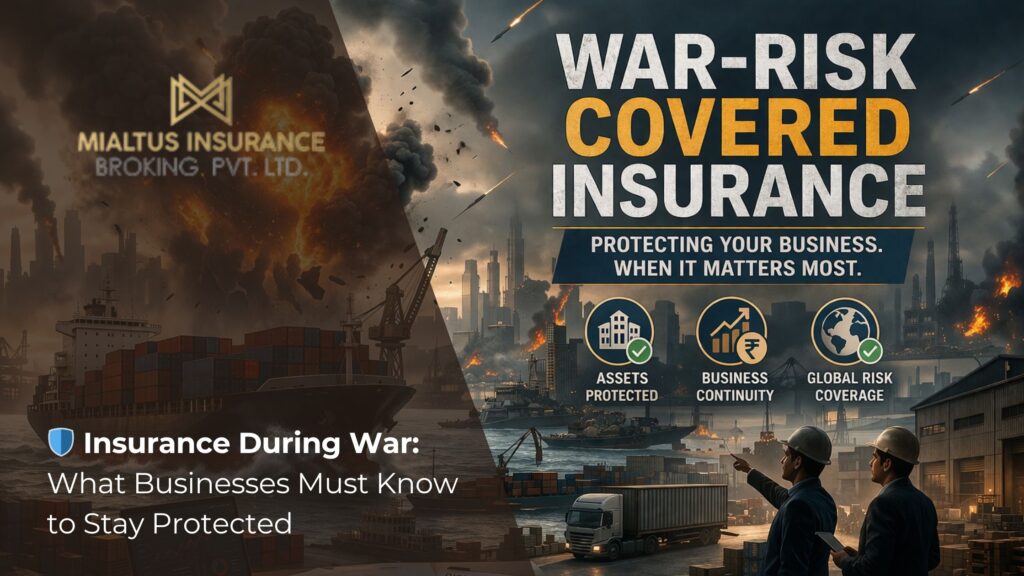
When we think about war, we often think in terms of borders, politics, and global headlines. But for businesses, the impact is far more direct and often far more damaging. Supply chains get disrupted. Shipments are delayed or destroyed. Operations come to a halt. Physical assets can be damaged without warning.
What many businesses don’t realize is this: most standard insurance policies do not cover war-related risks. This means that in times of conflict, companies can face massive financial losses without any protection.
The good news? There are ways to stay protected if you choose the right kind of coverage. In this article, we’ll walk you through three essential insurance solutions that can help safeguard your business during war or conflict situations.
🛡️ Insurance Solutions That Can Cover War Risks
While standard policies exclude war, certain insurance solutions offer specific extensions or add-ons designed to cover these risks. Let’s look at three key types of insurance that can make a real difference during uncertain times.
🚢 Marine & Cargo War Insurance
What It Covers
Marine & Cargo War Insurance is designed to protect goods while they are in transit during war or conflict situations.
It can cover:
- Damage to cargo due to war-related incidents
- Loss of goods caused by attacks, explosions, or seizure
- Disruptions in shipping routes due to conflict zones
Why It Matters
During war, global trade becomes highly unpredictable. Shipping routes may be blocked, ports may shut down, and cargo may be exposed to serious risks. Without war coverage, any loss during transit is typically not covered under standard marine insurance.
Who Should Consider It
- Exporters and importers
- Manufacturers dependent on global supply chains
- Businesses involved in international trade
🏭 Business Interruption Insurance (With War Extension)
What It Covers
This policy helps protect your income if your business operations are disrupted due to war-related events.
It can include:
- Loss of revenue due to forced shutdowns
- Supply chain disruptions
- Delays in operations caused by conflict
Why It Matters
In many cases, businesses are not physically damaged but they still cannot operate. And then operations stop, revenue stops. This type of insurance ensures that your business can survive financially during periods of disruption.
Real-World Scenario
Your factory may not be directly affected by conflict, but your suppliers are. Raw materials stop arriving, and production halts. Even without physical damage, your business suffers daily financial losses.
Who Should Consider It
- Manufacturing companies
- Businesses dependent on continuous operations
- Companies with complex supply chains
🏢 Property Insurance with War Add-ons
What It Covers
This insurance protects your physical assets against damage caused by war-related incidents.
It can include:
- Damage to buildings and infrastructure
- Loss or damage to machinery and equipment
- Impact from nearby explosions or conflict-related events
Why It Matters
For many businesses, physical assets represent a significant investment. Standard property insurance will not cover war-related damage unless a specific add-on is included. Without this coverage, rebuilding or repairing assets can become a major financial burden.
Who Should Consider It
- Warehouse owners
- Industrial units
- Businesses with high-value physical assets
📊 Quick Comparison
| Insurance Type | What It Protects | Key War Risk Covered |
| Marine & Cargo War Insurance | Goods in transit | Damage or loss during shipping |
| Business Interruption (War Extension) | Business income | Operational shutdowns |
| Property Insurance (War Add-on) | Physical assets | Damage to buildings & equipment |
🧠 Choosing the Right Coverage for Your Business
There is no one-size-fits-all solution when it comes to war risk insurance.
The right coverage depends on:
- The nature of your business
- Your exposure to international markets
- Your reliance on physical assets or supply chains
In most cases, businesses benefit from a combination of these insurance solutions rather than relying on just one. The key is to assess your risks properly and ensure that critical areas of your business are protected.
Mialtus Insurance Broking
At Mialtus Insurance Broking, we work closely with businesses across India to help them navigate complex and often overlooked risks.
As an insurance broker with tie-ups with leading insurance companies, we assist in:
- Identifying gaps in existing coverage
- Customizing insurance solutions based on business needs
- Providing access to specialized policies, including war risk coverage
Our focus is simple help businesses stay protected, even in uncertain and high-risk situations.
Conclusion: Be Prepared
War and conflict are unpredictable, but the financial risks they create can be managed with the right planning. Relying only on standard insurance policies can leave your business exposed when it matters the most. If your business has exposure to global markets or operational risks, now is the right time to review your insurance coverage and ensure you’re prepared for the unexpected.
For many small and mid-sized businesses, the office is far more than a rented space or a unit in a commercial tower. It holds computers, records, furniture, fit-outs, cash, visiting clients, and the day-to-day rhythm of the business itself. When a fire, burglary, electrical fault, flood, or liability incident interrupts that rhythm, the financial impact can be sharp and immediate. That is why office package insurance has become a practical risk solution for SMEs across India.
Protection built for real office risks
An SME office faces a distinct mix of exposures. In Mumbai, heavy rain and water ingress can damage interiors and equipment. In Bengaluru or Hyderabad, technology-driven offices may be more exposed to equipment breakdown and data-related risk. In Delhi NCR, a visitor injury claim or damage to expensive office interiors can create an unexpected cost. Even a smaller office with limited staff may carry a meaningful asset value once furniture, laptops, printers, air-conditioners, networking devices, and décor are counted properly.
A well-structured office package policy brings these risks under one umbrella. Instead of buying separate covers for property, burglary, electrical items, cash, liability, and employee accident, SMEs can combine relevant sections in one policy and shape the sum insured to match their actual exposure.
This works especially well for growing businesses that want clarity, cost control, and a cleaner renewal process.
What this policy usually includes
Office package insurance is designed to protect both the physical setup and the business activity linked to that setup. The exact sections vary by insurer, though the policy usually starts with fire and allied perils cover for office contents and may extend to burglary, electronic equipment, plate glass, sign boards, money cover, and liability.
A broader version can also include business interruption, which helps when a covered incident halts operations and affects income. For an SME, this part often matters just as much as asset replacement, because fixed expenses do not stop when the office does.
Typical sections often include:
- Fire and allied perils: Furniture, fixtures, interiors, office contents, and in some cases the building portion if owned
- Burglary and housebreaking: Loss of insured assets after forced entry or violent entry
- Electronic equipment: Computers, servers, printers, networking devices, and sudden accidental damage or breakdown
- Public liability: Injury to visitors or damage to third-party property at the office premises
- Money cover: Cash in safe, cash in transit, or loss during handling, subject to policy terms
- Glass breakage
- Signage damage
- Portable laptops
- Employee personal accident
- Fidelity risk
A quick view of key cover sections
The right mix depends on the kind of office you run, the asset value inside it, and how dependent you are on uninterrupted operations.
| Cover section | What it protects | Who should pay close attention |
|---|---|---|
| Fire and allied perils | Interiors, furniture, fixtures, equipment, contents | All SMEs |
| Burglary | Theft after forcible entry, damaged locks and premises | Offices with electronics, stock, or high-value assets |
| Electronic equipment | Servers, desktops, laptops, printers, EPABX, network devices | IT, consulting, design, professional firms |
| Money insurance | Cash in safe or transit | Retail offices, collection-heavy businesses |
| Public liability | Visitor injury or third-party property damage | Client-facing offices, clinics, agencies, training centres |
| Business interruption | Loss of income and continuing expenses after a covered event | Any SME with fixed overheads and time-sensitive contracts |
| Group personal accident | Financial support in case of employee injury | Businesses with travel, field staff, or larger office teams |
Why a package format makes sense for SMEs
Buying one bundled office policy can be more practical than managing scattered covers from different insurers. Documentation is simpler, renewals are easier to track, and the risk picture is easier to review each year as the business grows.
It also helps avoid common gaps. Many businesses insure laptops but forget plate glass. They insure fire risk but leave out burglary. They cover contents, yet skip liability. A package policy reduces the chance of leaving out an important section simply because it sat in a different policy document.
When structured well, it gives SMEs a stronger base with room for sensible add-ons:
- Cyber extension: Useful for IT-enabled businesses, professional firms, and offices that hold client data
- Business interruption: Valuable where even a few days of closure can hurt revenue
- Employee dishonesty cover: Relevant where financial handling or stock movement is part of operations
- Portable equipment cover: Important for hybrid teams carrying laptops outside office premises
Cost, value, and what affects premium
Premiums are shaped by the sum insured, city, occupancy, construction details, claims history, and the sections chosen. As a broad market indication, an office package with a sum insured of around ₹50 lakh may start at a few thousand rupees per year, though the final premium can move up based on risk profile and optional covers.
For SMEs, the real question is not just what the premium is, but what a major uninsured incident would cost. Replacing office interiors, buying new systems, handling a liability claim, or paying rent while operations are paused can be far more expensive than the annual policy outlay.
A sensible buying process usually looks at:
- asset values
- nature of business activity
- location-specific hazards
- visitor footfall
- dependency on electronics
- need for continuity after a loss
Advisory support matters as much as the policy
The wording of an office package policy can look straightforward until claim time. That is where advice makes a visible difference. Mialtus Insurance Broking Pvt. Ltd. supports SMEs with policy comparison across insurers, risk review, section selection, and claims coordination, helping businesses choose cover that fits the way the office actually functions.
This is useful for firms that are scaling up, shifting offices, taking higher-value fit-outs, or moving into client-heavy spaces. A broker-led review can help identify whether a business needs only a basic office cover or a broader package with business interruption, liability, portable equipment, cash, or employee-related extensions.
The value is not only in getting quotes. It is also in unbundling the policy wording, setting realistic sums insured, checking exclusions, and avoiding both underinsurance and unnecessary spend.
When a claim happens
Claims support is where the policy becomes real. After an incident, the first few hours matter. Prompt intimation, proper documentation, and clear communication with the insurer can influence how smoothly the matter moves.
In most cases, the process follows a standard path: notify the insurer or broker, register the claim, submit the claim form and supporting papers, allow survey or inspection, respond to queries, and then receive settlement as per terms and assessment. For an SME already dealing with disruption, coordinated support during this stage can save time and reduce stress.
Good claim handling usually starts with simple habits inside the business:
- keep asset registers updated
- retain purchase invoices where possible
- document fit-outs and equipment with photos
- report incidents immediately
- preserve evidence after a loss, unless safety requires urgent removal
Choosing the right cover for your office
No two SME offices carry the same exposure. A CA firm in South Mumbai, a design studio in Pune, an IT office in Noida, and a distributor’s branch office in Ahmedabad will not buy the same policy in the same way. The right plan depends on what sits inside the premises, who visits it, what could stop operations, and how fast the business needs to recover after a loss.
That is why office package insurance works best when it is reviewed as a business protection tool, not as a box-ticking purchase. A thoughtful structure can protect assets, income, and liability in one place, while still staying cost-aware.
If your office holds critical equipment, client-facing operations, or a meaningful investment in interiors and infrastructure, this is a good time to review whether your current cover is basic, partial, or genuinely fit for the risks your business carries today.
Understanding Employee Life Insurance Benefits
When an organisation wants to protect its people in a meaningful way, salary alone is rarely enough. Employees also look for financial security for their families, especially in a market where medical costs, loans, school fees, and household commitments can put real pressure on a family after an unexpected loss.
Group term life insurance offers a practical answer. It gives employees life cover under a master policy issued to the employer, usually at competitive group rates, with simple administration and broad eligibility. For businesses in India, it is one of the most effective ways to add substance to the employee benefits programme without creating unnecessary complexity.
What this cover means for employers and employees
Group term life insurance is a pure protection plan for a defined employee group. If an insured employee passes away during the policy term, the nominee or beneficiary receives the agreed sum assured, subject to policy terms and conditions.
Unlike savings-linked life insurance, this cover is focused on one clear outcome: immediate financial support to the family. That simplicity is exactly why many employers prefer it. It is easy to explain, easy to administer, and easy for employees to value.
For employees, the benefit is direct. They receive life cover without the pricing and paperwork that often come with individual policies. For employers, it supports workforce care, strengthens the benefits package, and adds a layer of social responsibility to compensation design.
Why businesses in India choose it
In many Indian organisations, group term life insurance sits alongside group health insurance as a core employee benefit. It is relevant for large corporates, growing SMEs, professional firms, and businesses with geographically spread teams.
After reviewing workforce needs, employers often choose this cover for reasons like:
- financial security for dependants
- affordable group pricing
- simple onboarding through HR
- stronger employee confidence
- better value in the benefits mix
There is also a strong retention angle. Employees notice when an employer has planned for their family’s welfare, not just their monthly payout. That creates trust, and trust tends to stay longer than a purely transactional salary increase.
How cover is usually structured
Most group term life plans are designed around a fixed benefit structure. The sum assured may be a flat amount for all employees, or it may be linked to salary, designation, grade, or a defined category within the workforce.
A common structure in India includes basic employer-funded cover, with an option for employees to buy additional voluntary cover through payroll deduction. This keeps the base benefit inclusive while giving flexibility to those who want higher protection.
| Feature | Group Term Life Insurance | Individual Life Insurance |
|---|---|---|
| Policyholder | Employer holds the master policy | Individual holds the policy |
| Premium | Often fully or partly paid by employer | Paid by the individual |
| Underwriting | Usually simplified for eligible employees | Often involves medical and financial checks |
| Coverage basis | Flat amount or salary multiple | Chosen by the policyholder |
| Portability | Usually linked to employment | Continues regardless of employer |
| Purpose | Employee benefit and family protection | Personal long-term financial planning |
This comparison matters because group term cover is not meant to replace personal life insurance in every case. It works best as a strong workplace benefit, while some employees may still choose separate personal cover for larger financial goals.
How the policy works inside a company
The process is usually straightforward when the plan is designed well. Eligible employees are enrolled through HR during onboarding, policy renewal, or a defined benefits window. The employer shares employee data with the insurer through the broker, and the policy is issued under an agreed structure.
In many cases, standard coverage does not require individual medical tests, which helps organisations insure a large population quickly. This is especially useful for companies with scale, multi-city teams, or fast hiring cycles.
The operational flow usually looks like this:
- Eligibility: Full-time employees, or another defined category, become part of the group as per company policy
- Sum assured: Cover may be fixed at a flat amount or linked to salary multiples
- Premium funding: The employer may bear the full cost, or employees may contribute for additional cover
- Policy term: Most plans are annual and renewed each year
- Claim payment: On a valid claim, the insurer pays the nominee or beneficiary as per the policy terms
One important point needs to be communicated clearly to employees. Group term life insurance is generally tied to employment. If an employee leaves the organisation, the cover typically stops unless a conversion or continuation option is available under that policy.
Add-ons that can make the cover stronger
A well-designed plan can go beyond basic life cover. Depending on insurer options and workforce needs, employers may add riders or supporting benefits to create a more rounded protection framework.
These choices are often considered after reviewing demographics, salary bands, job roles, and budget:
- Accidental death benefit: Extra payout in case of accidental death
- Critical illness rider: Added support on diagnosis of specified illnesses
- Disability-related benefits: Financial relief after defined disability events
- spouse or dependent add-on options
- voluntary top-up cover for senior employees or key staff
Not every workforce needs every rider. The right approach is usually to keep the base policy clear and strong, then add features that match the risk profile of the employee base.
Why broker-led design makes a difference
Group term life insurance looks simple on the surface, but the quality of the plan depends on how it is structured. Small decisions can affect premium, claims experience, employee communication, and long-term value.
That is where a broker brings clarity. Mialtus Insurance Broking Pvt. Ltd., with its pan-India presence across corporate and retail insurance solutions, supports employers with insurer comparison, benefit structuring, policy placement, renewals, and claims coordination. The focus is not just on obtaining a quote, but on making the cover clear, relevant, and workable for the business.
This is especially useful when an organisation needs to decide between flat cover and salary-linked cover, employer-paid and contributory models, or base protection versus layered protection with riders. A broker can also help assess whether the cover should differ by grade, location, or risk category, while keeping the plan fair and administratively practical.
Employee communication matters as much as policy wording
A strong policy can still feel invisible if employees do not know what it covers. Many businesses invest in insurance, then lose impact because the benefit is poorly communicated.
Employees should know:
- who is covered
- how much cover applies
- who can be nominated
- when the cover starts and ends
- how a claim is reported
Clear communication improves appreciation of the benefit and reduces confusion during difficult situations. In life insurance, that matters a great deal. When a claim arises, families need direction, not uncertainty.
Claims support is where service becomes real
The true value of group term life insurance is felt at claim stage. A policy document is important, but timely guidance, correct documentation, and compassionate coordination are what families remember.
A broker-led support model can help employers and nominees with claim notification, document review, follow-up with the insurer, and status tracking. This reduces delays and gives HR teams a structured process during a sensitive event.
For many organisations, this support is a major reason to work with an experienced insurance broking and risk advisory partner. Pricing matters, but service during a claim matters more.
A practical fit for growing organisations
Indian businesses are becoming more thoughtful about total rewards. Employees compare not only pay packages, but also the quality of protection offered to their families. Group term life insurance fits this shift well because it is measurable, meaningful, and cost-aware.
It works for a wide range of businesses:
- startups building a credible benefits base
- SMEs improving retention
- large corporates formalising grade-wise cover
- professional firms protecting key talent
With the right structure, this benefit can support employee wellbeing, strengthen employer brand, and bring discipline to risk protection across the workforce.
For organisations reviewing employee benefits, the next step is usually not just buying a policy, but choosing the right cover design, insurer terms, communication plan, and claims support model. That is where careful broking advice can turn a standard policy into a dependable employee protection solution.






 ISO Certified: 9001 – 2015