

Businesses move products every day. Manufacturers send raw materials to factories. Wholesalers dispatch goods to retailers. E commerce sellers ship orders across cities and states. Every movement involves risk.Damage, theft, accidents, or mishandling during transport can lead to financial loss. Even a short distance shipment can face unexpected problems on the road.
Goods in transit insurance helps businesses manage this risk. For companies that rely on logistics to deliver products, this coverage plays an important role in protecting revenue and maintaining operational stability.
What is Goods in Transit Insurance
Goods in transit insurance is a policy that protects goods against loss or damage while they are being transported by road, rail, air, or other approved modes of transport. This type of insurance is commonly used by manufacturers, wholesalers, distributors, retailers, and logistics companies. Any business that moves physical products from one place to another can face transportation risks.
For example, a furniture manufacturer shipping products to dealers across India may face the risk of vehicle accidents or cargo damage. A D2C brand delivering online orders may face theft or package damage during transportation. Goods in transit insurance helps reduce the financial impact of such incidents.The policy ensures that businesses do not have to absorb the full cost of damaged or lost goods during transit.
What Does Goods in Transit Insurance Cover
Goods in transit insurance generally covers a wide range of risks that can occur during transportation. The exact coverage depends on the policy terms and the type of goods being transported.
One of the primary protections is against accidental damage. Goods may get damaged during loading, unloading, or while the vehicle is moving. Road accidents are another common risk. If a delivery truck meets with an accident and the goods are destroyed or damaged, the policy may cover the loss. The policy may also provide protection against theft or burglary during the journey. Cargo theft can occur during stops or while vehicles are parked overnight. In such situations, insurance helps businesses recover the value of the lost goods.
Natural events can also affect transportation. Heavy rain, floods, or other environmental conditions may damage goods in transit. Many policies include coverage for such events depending on the coverage type selected. Another important area of protection involves handling related damage. Goods can be affected while being loaded onto vehicles or unloaded at the destination. Insurance support helps businesses recover costs in such situations.
Overall, goods in transit insurance focuses on protecting the value of goods from the moment they leave the origin point until they safely reach their destination.
What Is Not Covered
While goods in transit insurance provides important protection, certain situations are usually excluded from coverage. Understanding these exclusions helps businesses avoid claim disputes later.
One common exclusion involves poor packaging. If goods are damaged because they were not packed properly before transportation, the insurer may reject the claim. Businesses must ensure that products are packed according to standard transport practices.
Another exclusion relates to delays in delivery. Insurance typically covers physical damage or loss of goods. Financial loss caused by delayed shipments is usually not covered.
Normal wear and tear is also excluded. Goods may experience minor deterioration during regular transportation. Such natural changes are not considered insurable events.
Intentional damage or fraudulent actions by the insured party are also excluded from coverage. If loss occurs due to deliberate actions, the policy will not respond.
Certain high risk goods may also require special approval before coverage. Items such as fragile materials, hazardous substances, or very high value cargo may need specific policy conditions.
Understanding these exclusions helps businesses prepare better and maintain proper logistics practices.
Types of Goods in Transit Insurance
Different businesses have different transportation needs. Because of this, insurers offer several types of goods in transit insurance policies.
One common option is a single transit policy. This policy covers a specific shipment for a single journey. Businesses that transport goods occasionally often choose this option.
Another option is an annual transit policy. This policy covers multiple shipments throughout the year. Companies that transport goods frequently prefer this option because it simplifies administration and ensures continuous protection.
Carrier policies are another category. Logistics companies and transport operators often purchase these policies to protect goods they carry on behalf of their clients.
Businesses can also choose coverage based on geographic scope. Some policies cover transportation within a specific city or state. Others provide nationwide protection depending on the operational requirements.
Selecting the right type of goods in transit insurance depends on shipment frequency, cargo value, and business logistics structure.
Factors Affecting Premium
The premium for goods in transit insurance depends on several factors. Insurers assess these factors to determine the level of risk involved in transportation.
One of the main factors is the nature of the goods. Fragile items or high value goods may carry a higher premium because the risk of damage or loss is greater. The mode of transport also influences the premium. Road transport, rail movement, and air cargo involve different levels of exposure to risk. Distance and route conditions also matter. Longer transportation routes or routes passing through high risk areas may lead to higher premiums. Packaging standards can also affect pricing. Well packed goods reduce the risk of damage and may help keep premiums lower.
The claim history of the business is another important factor. Companies with frequent claims may face higher premiums compared to businesses with strong risk management practices.
Facts
1) 55 road accidents happen every hour in India.- Business Standards
2) ₹1,000+ crore worth of cargo is stolen in India every year. – FreightFox
3) 12,000+ vehicle fires are reported in India every year. – NCRB
4) Floods affect over 7 million hectares of land in India annually. – NDMA
5) Over 30% of logistics insurance claims come from cargo damage. – ITLN
Benefits of Goods in Transit Insurance
Goods in transit insurance provides several practical benefits for businesses that depend on logistics operations.
One of the biggest advantages is financial protection. If goods are lost or damaged during transport, the policy helps recover the value of the shipment. This prevents sudden financial losses.
Insurance also supports business continuity. When losses occur, businesses can recover quickly without disrupting supply chains or customer commitments.
Another important benefit is increased trust with partners. Retailers, distributors, and clients often prefer working with suppliers who protect shipments through insurance.
For companies involved in large shipments or high value goods, insurance also strengthens financial planning. It allows businesses to operate with greater confidence when moving inventory across regions.
Overall, goods in transit insurance helps businesses manage transportation risks while maintaining stable operations.
How Mialtus Insurance Broking Helps Businesses Stay Protected
Choosing the right goods in transit insurance requires more than simply buying a policy. Businesses must ensure that the coverage matches their logistics operations, cargo value, and transportation routes. Mialtus Insurance Broking works with businesses to design insurance solutions that address real transportation risks. The team helps companies evaluate their shipment patterns, identify exposure points, and select policies that provide meaningful protection. With the right insurance structure in place, businesses can move products with greater confidence and focus on growth while reducing the financial impact of unexpected transport risks.
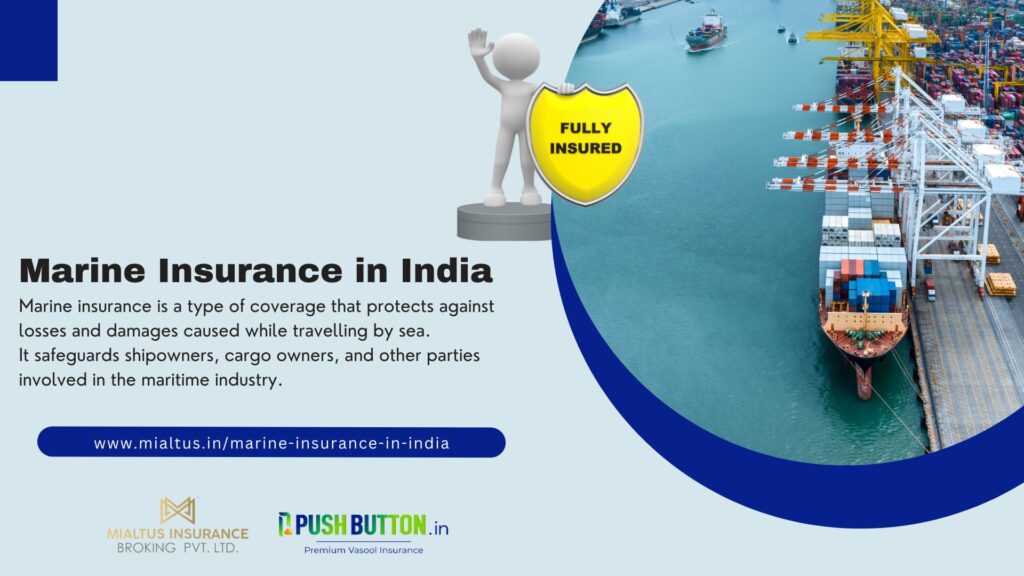
Marine insurance is a type of coverage that protects against losses and damages caused while traveling by sea. It safeguards shipowners, cargo owners, and other parties involved in the maritime industry. Marine insurance has been an essential component of global trade for centuries, and it is no different in India. The Indian marine insurance market has a long history dating back to the nineteenth century. This article will dig deeper into the world of marine insurance in India, discussing its various types, features, claim process, and regulatory framework.
The Importance of Marine Insurance in India
Marine insurance is critical to the Indian economy because the country is heavily reliant on sea trade. According to the Ministry of Shipping, the sea transports more than 90% of India’s trade by volume and 70% by value. The Indian coastline is also a popular tourist destination, with millions of people traveling by sea each year. Marine insurance makes sure that the risks of sea transportation are managed and that any losses or damages are compensated for.
Furthermore, marine insurance is required by Indian law. Every Indian ship is required to have a valid hull insurance policy; failure to comply can lead to penalties and even ship detention. Likewise, many countries require ships entering their ports to have valid marine insurance.
Types of Marine Insurance
Marine insurance in India is divided into the following categories:
- Hull Insurance: Physical damage to the ship and its machinery caused by perils such as storms, collisions, and fires is covered by hull insurance. It also covers the shipowner’s liability for third-party property or personal damage. The Merchant Shipping Act of 1958, which requires every Indian ship to have a valid insurance policy, makes hull insurance mandatory.
- Cargo Insurance: Cargo insurance protects the goods transported by sea from loss or damage. The cargo owner, shipper, or customer can purchase it. Cargo insurance can protect against a wide range of risks, including theft, damage, and loss caused by weather or accidents.
- Freight Insurance: This type of insurance protects the moving company against loss of transportation charges caused by cargo damage or loss.
- Liability Insurance: This type of insurance covers the shipowner’s or operator’s legal liabilities for third-party damages, such as collisions with other ships or damage to ports or other facilities.
Features of Marine Insurance in India
The following are the features of Marine Insurance in India:
- Voyage or Time Policies: Marine insurance policies can be voyage-specific or time-specific. Voyage policies cover a specific voyage, while time policies cover a specific time period, usually a year.
- Valuation: The valuation of the insured subject matter, such as the ship or cargo, is crucial in determining the premium and compensation in case of loss.
- Risk Coverage: Marine insurance policies in India cover various risks, including perils of the sea, piracy, war, and other maritime risks.
- Institute Cargo Clauses (ICC): These clauses define the risks covered by the policy and the compensation payable in case of loss or damage.
Marine Insurance in India Claim Process
The claim process for marine insurance in India typically involves the following steps:
- Notify the insurer: The insured must notify the insurer of any loss or damage as soon as possible. The notice should include the policy number, date and time of the loss, location, and nature of the loss or damage.
- Provide documents: The insurer will require documents such as the policy document, shipping documents, invoice, and any other relevant documents related to the loss or damage.
- Survey and inspection: The insurer will appoint a surveyor or inspector to assess the extent of the loss or damage. The surveyor or inspector will prepare a report and submit it to the insurer.
- Settlement of claim: Based on the surveyor’s report, the insurer will determine the amount of the claim and settle the claim accordingly.
- Dispute resolution: If there is any dispute regarding the settlement amount, the parties can resolve the dispute through arbitration or in court.
Regulatory Framework of Marine Insurance in India
The Insurance Regulatory and Development Authority of India (IRDAI) oversees the set of regulations for marine insurance in India. The IRDAI governs the operations of insurance companies in India, including marine insurers. Furthermore, the Indian Marine Insurance Act of 1963 establishes the legal foundation for marine insurance policies in India. The act defines insurers’ and insurance companies’ rights and responsibilities, as well as guidelines for claim settlement.
Conclusion
Finally, marine insurance is a critical component of India’s maritime industry. It protects shipowners, cargo owners, and other maritime trade participants against loss or damage. The Indian marine insurance market provides hull insurance, cargo insurance, freight insurance, and liability insurance. These policies differ in terms of voyage or time policies, valuation, and risk coverage. The IRDAI and the Indian Marine Insurance Act of 1963 govern the regulatory framework for marine insurance in India.






 ISO Certified: 9001 – 2015