


Cyber Insurance for Startups matters now more than ever. Startups rely on digital tools, cloud platforms, and customer data. These digital assets attract cyber-attacks. According to the Verizon Data Breach Investigations Report 2024, 43 percent of cyber-attacks target small businesses. This includes many startups. Startups often lack strong security controls and face urgent demands to grow fast. These factors increase their cyber risk and explain why cyber insurance has become essential. This guide explains how startups use cyber insurance for protection, what it covers, how to choose a policy, and the best providers for early stage companies.
What Is Cyber Insurance for Startups
Cyber insurance for startups is a policy that helps pay for costs when a cyber incident occurs. These incidents include data breaches, ransomware, business interruption, and legal costs. The policy helps with response actions, recovery work, and financial losses caused by attacks.
For startups, cyber insurance is both a safety net and a risk management tool. It connects important financial support with professional response resources. Startups with limited cash reserves can face major losses after an attack. Cyber insurance reduces this financial burden. It also helps startups build trust with partners, customers, and investors.
Why Startups Are Easy Targets
Startups face higher cyber risk for clear reasons. These factors also show why insurance makes sense.
• Limited security budget
• Remote teams
• Cloud systems
• Fast growth
Startups often operate with lean budgets. Security tools may be limited or delayed. Remote teams add complexity because personal devices and home networks are used. Cloud systems store important data but require proper controls. Rapid growth often means systems change fast and security planning lags behind. These issues explain why attackers focus on startups and why cyber insurance is a practical protection.
What Does Cyber Insurance Cover
Cyber insurance for startups includes specific protections. These coverages support recovery and reduce financial loss.
• Data breach response
• Legal costs
• Regulatory fines
• Business interruption
• Ransomware
Data breach response covers steps like investigation, system clean up, and notifying affected individuals. Legal costs help pay for lawyers and defines when lawsuits follow a breach. Regulatory fines can be expensive if laws like data protection rules apply. Business interruption reimbursement helps cover lost income when systems are down. Ransomware coverage pays for recovery costs, and sometimes extortion payments when justified.
Some policies also include support for social engineering losses, crisis communication, and public relations. Startups should check each coverage item carefully before buying a policy.
How Startups Use Cyber Insurance for Protection
Startups use cyber insurance in several practical ways. This extends beyond claim payments.
First, startups use cyber insurance to access professional response experts. After a breach, founders often face stress and uncertainty. The insurer’s incident response team guides actions for the first hours and days. This support reduces mistakes and speeds recovery.
Second, startups use cyber insurance to build confidence with investors. Many investors now ask about risk planning. Having a cyber insurance policy signals that the startup understands digital risk and plans ahead.
Third, cyber insurance helps protect customer trust. When customers see that a startup acts quickly and professionally after a breach, they remain loyal. This trust protects revenue and reputation.
Last, startups use cyber insurance to support compliance. Many industries now require data protection practices. Insurance helps cover regulatory costs and shows that founders take compliance seriously.
How to Choose the Right Policy
Choosing a policy requires careful comparison. Price alone is not enough.
• Check data limits
• Check ransomware coverage
• Check incident response support
Data limits should reflect the amount and type of data your startup handles. A retail startup with customer payment data needs higher limits than a small service provider. Ransomware coverage should include both payment and recovery costs. Some policies limit how much they pay for ransomware. Incident response support should be available 24 by 7, not just business hours.
Startups should also review exclusions. Some policies do not cover incidents involving third party cloud services unless specified. Ask the insurer about add ons that cover social engineering fraud and media liability. These extra coverages can prevent gaps that attackers exploit.
Coverage Comparison Table
| Coverage Area | Basic Policy | Advanced Policy |
| Data breach response | yes | yes |
| Ransomware payment | Limited | Full |
| Business interruption | Partial | Full |
| Regulatory fines | No | Yes |
| Incident response team | Limited hours | 24 by 7 support |
This table shows why startups should consider advanced coverage. Basic policies may be less costly but leave serious gaps.
Best Cyber Insurance Providers for Startups
Choosing the right provider matters. Some insurers specialize in startup risks and offer tailored support.
Mialtus insurance
Mialtus insurance offers startup friendly cyber insurance plans. Their coverage focuses on key startup risks. They provide strong incident response resources and help with claim navigation. Their policies match how startups use cyber insurance for protection.
JB Boda
JB Boda is one of India’s oldest insurance brokers. They offer customized cyber insurance solutions for startups and SMEs. Their strength lies in risk assessment support and policy structuring.
Turtlemint
Turtlemint focuses on digital insurance distribution. Their cyber insurance options are simple to compare and easy to buy. This works well for early stage startups looking for quick and affordable cyber insurance coverage without complex paperwork.
Square Insurance Brokers
Square Insurance offers startup friendly cyber insurance guidance. They focus on explaining policy terms in simple language. Their advisory model helps founders choose coverage based on real operational risk instead of marketing promises.
Ideal Insurance Brokers
Ideal Insurance Brokers provide cyber insurance solutions tailored for Indian SMEs and startups. They help startups compare multiple insurers and negotiate better coverage limits. Their experience with Indian compliance standards adds practical value.
Startups should compare quotes from these providers. Look at policy wording and incident support services, not only premiums.
Industry Risk and Cyber Threats
Some industries face higher cyber risk. For example, manufacturing startups dealing with connected systems and supply networks face frequent attacks. You can learn more about sector specific threats in the blog link Why Cyber Attacks Are Rising on SMEs in Manufacturing Industry
Healthcare tech startups handle sensitive patient data and face strict regulatory fines after breaches. Retail and ecommerce startups process payments and store customer information online. Fintech startups deal with financial data and face targeted attacks. Understanding industry risk helps startups choose the right cyber insurance coverage and limits.
Real Cost of Not Having Cyber Insurance
The cost of a cyber-attack extends beyond immediate damage. Startups face investigation costs, system rebuilds, legal fees, and customer notification costs. Downtime affects revenue directly. According to the IBM Cost of a Data Breach Report 2024, the average breach cost exceeded 3 million dollars globally. This data shows how expensive breaches can be and why cyber insurance matters for startups with limited cash reserves.
How Cyber Insurance Supports Growth
Cyber insurance supports growth in clear ways. It helps when startups seek partnerships. Many enterprises now ask startups to prove they have cyber insurance before signing integration contracts. It supports compliance with data privacy laws by covering fines and legal costs. Insurance also helps startups scale by aligning coverage with data volume. When startups plan exit events or funding rounds, having cyber insurance increases confidence for buyers and investors.
Common Mistakes Startups Make
- Choosing only low premium plans.
- Ignoring ransomware sub limits.
- Skipping incident response coverage.
- Not updating coverage after funding rounds.
These mistakes create exposure. Startups must update coverage as they grow. A static policy from founding stage may not cover new risks after product launches or customer growth.
Action Checklist for Founders
- Assess your data exposure.
- Map your revenue dependency on digital systems.
- Review past incidents in your industry.
- Compare Cyber Insurance for Startups providers.
- Read coverage details carefully.
- Ask about response time and support.
- Update policy after funding events.
Final Thoughts
Cyber insurance for startups is not about fear. It is about smart planning. Cyber risk will continue to grow as attackers automate attacks and exploit remote work trends. Startups will remain targets because they hold valuable data and often operate with limited security defenses.
Using cyber insurance for protection lets founders focus on growth while protecting cash flow and reputation. It supports investors, partners, and customers. Startups that adopt cyber insurance early build stronger foundations and reduce financial risk. Cyber insurance becomes part of a resilient business strategy in a digital world.
Manufacturing SMEs are moving through a major digital shift. Production floors now rely on automated systems, software driven supply chains, and cloud enabled platforms to run daily workflows. These tools help businesses produce faster and operate leaner. They also open new entry points for cyber threats. Many business owners still believe cybercrime targets only large enterprises. That belief no longer holds true. Attackers increasingly pursue smaller manufacturers because defences are weaker and operational data remains highly valuable. This shift explains why cyber-attacks are rising on SMEs in the manufacturing industry. Recognizing this exposure and planning for it have become essential for business continuity.

What Is Cyber Insurance?
Cyber insurance is a financial protection solution designed to help businesses recover from cyber incidents. It covers losses caused by data breaches, ransomware attacks, system failures, and cyber extortion. For manufacturing SMEs, cyber insurance acts as a safety net. It supports recovery costs that can otherwise disrupt production and drain working capital. As digital adoption grows, cyber insurance is becoming as important as property or liability insurance.
Why Cyber Attacks Are Rising on SMEs in the Manufacturing Industry
Manufacturing SMEs have become attractive targets for cyber criminals. The reason is simple. They rely on digital systems but often lack strong security frameworks. This gap creates opportunities for attackers. This explains clearly why cyber-attacks are rising on SMEs in manufacturing.
Most manufacturing SMEs now use ERP systems, cloud accounting, inventory software, and smart machinery. These systems generate and store sensitive data. This includes supplier contracts, pricing data, designs, and customer information. Attackers know that disrupting these systems can halt production within hours. This pressure makes SMEs more likely to pay ransom quickly.
Another reason why cyber-attack is rising among SMEs is limited cybersecurity awareness. Many manufacturing owners focus on physical risk. Fire, theft, and machinery breakdown receive attention. Cyber risk often remains ignored. Outdated software, weak passwords, and untrained staff increase vulnerability.
Supply chain integration also plays a role. Manufacturing SMEs connect digitally with vendors and logistics partners. A single compromised link can expose the entire network. Cyber criminals exploit these connections to move laterally across systems. This pattern has made manufacturing SMEs prime targets.
Common Cyber Threats Faced by SMEs Today;
Cyber threats are no longer complex attacks targeting only large enterprises. Simple tactics now cause serious damage. Understanding these threats helps explain why cyber-attacks are rising on SMEs.
Phishing attacks remain the most common threat. Employees receive emails that look legitimate. A single click can expose login credentials or install malware. Manufacturing SMEs often lack regular employee training. This increases success rates for attackers.
Ransomware is another major risk. Cybercriminals encrypt essential systems, demanding payment for their restoration. For a manufacturing SME, this can stop production completely. Downtime leads to missed deliveries and broken contracts. This pressure explains why cyber-attacks are rising on SMEs that depend on continuous operations.
Business email compromise is also growing. Attackers impersonate suppliers or senior managers. They trick finance teams into transferring funds. These losses are often immediate and difficult to recover.
Cloud misconfiguration is an overlooked threat. Many SMEs move to cloud platforms without proper security settings. Open access points expose sensitive manufacturing data. Cyber criminals actively scan for these weaknesses.
The Financial Impact of a Cyber Attack on an SMEs.
The financial impact of a cyber-attack extends far beyond immediate loss. This is another reason why cyber-attack are rising on SMEs. Attackers know smaller firms struggle to absorb sudden costs.
Direct costs include ransom payments, forensic investigation, and system restoration. Even a minor incident can cost several lakhs. Larger incidents can cross crores depending on downtime and data loss.
Indirect costs often hurt more. Production stoppage leads to revenue loss. Delayed deliveries damage client trust. Long standing customers may move to competitors. For manufacturing SMEs, reputation is critical and difficult to rebuild.
Legal and regulatory costs also add pressure. Data protection laws require notification and compliance. Failure to meet these obligations can result in penalties.
Studies show that many SMEs fail to recover fully after a major cyber incident. Cash flow disruption and loss of confidence create long term instability. This harsh reality reinforces why cyber-attacks are rising on SMEs. Attackers see high impact with low resistance.
Why Cyber Insurance Is Important for Manufacturing SMEs.
Cyber insurance addresses the financial shock that cyber incidents create. For manufacturing SMEs, it provides stability during crisis.
Cyber insurance supports immediate response. It helps cover investigation costs, legal advice, and technical recovery. This speeds up restoration of operations.
Business interruption coverage is especially valuable. Manufacturing relies on continuous output. Cyber insurance compensates for lost income during downtime. This protection helps maintain payroll and supplier payments.
Cyber insurance also improves preparedness. Insurers often require basic security measures. This encourages SMEs to strengthen defences before an incident occurs.
For owners, cyber insurance offers peace of mind. Knowing that financial exposure is controlled allows focus on growth rather than crisis management. As digital dependence grows, cyber insurance becomes a core risk management tool.
What Cyber Insurance Covers for SMEs.
Cyber insurance coverage addresses multiple risk areas that manufacturing SMEs face. Understanding coverage helps owners see its value clearly.
Most policies cover data breach response costs. This includes customer notification, credit monitoring, and public relations support.
Ransomware related costs are also covered. This may include negotiation support, ransom payment where legally permitted, and system recovery expenses.
Business interruption losses form a critical part of coverage. Income loss due to system downtime receives compensation. This is vital given why cyber-attacks are rising among SMEs that cannot afford long shutdowns.
Legal and regulatory costs are included in many policies. This cover defines expenses and penalties related to data protection laws.
Some policies also cover cyber extortion and digital asset restoration. Coverage varies based on risk profile and industry exposure.
How Mialtus Insurance Helps SMEs Manage Cyber Risk.
Mialtus insurance understands the unique challenges faced by manufacturing SMEs. Their approach goes beyond policy placement. They focus on risk understanding and long-term resilience.
Mialtus insurance assesses business operations in detail. This includes digital exposure, supply chain connections, and data sensitivity. This tailored approach ensures relevant coverage.
Their cyber insurance solutions align with the realities of manufacturing operations. They help SMEs select coverage that protects revenue, reputation, and continuity.
In the event of a cyber incident, Mialtus insurance supports claims handling and coordination. This reduces stress for business owners during critical moments.
By partnering with Mialtus insurance, manufacturing SMEs gain a strategic ally. This support is essential in an environment where cyber-attacks are rising on SMEs every year.
Final Thoughts for Manufacturing SME Owners:
Digital transformation has changed manufacturing permanently. Efficiency and scale now depend on technology. This dependence has also increased risk. The evidence is clear. This is why cyber-attacks are rising on SMEs across the manufacturing industry.
Ignoring cyber risk is no longer an option. Financial loss, downtime, and reputational damage can threaten survival. Cyber insurance offers a practical solution. It does not replace security controls. It strengthens financial resilience.
Manufacturing SME owners who act early gain an advantage. They protect operations, safeguard cash flow, and build trust with customers. In a high-risk digital environment, preparation defines survival. Cyber insurance, supported by the right partner, plays a critical role in that preparation.
Book a Free Cyber Risk Assessment.
Protect your cash flow, assets, and business continuity.
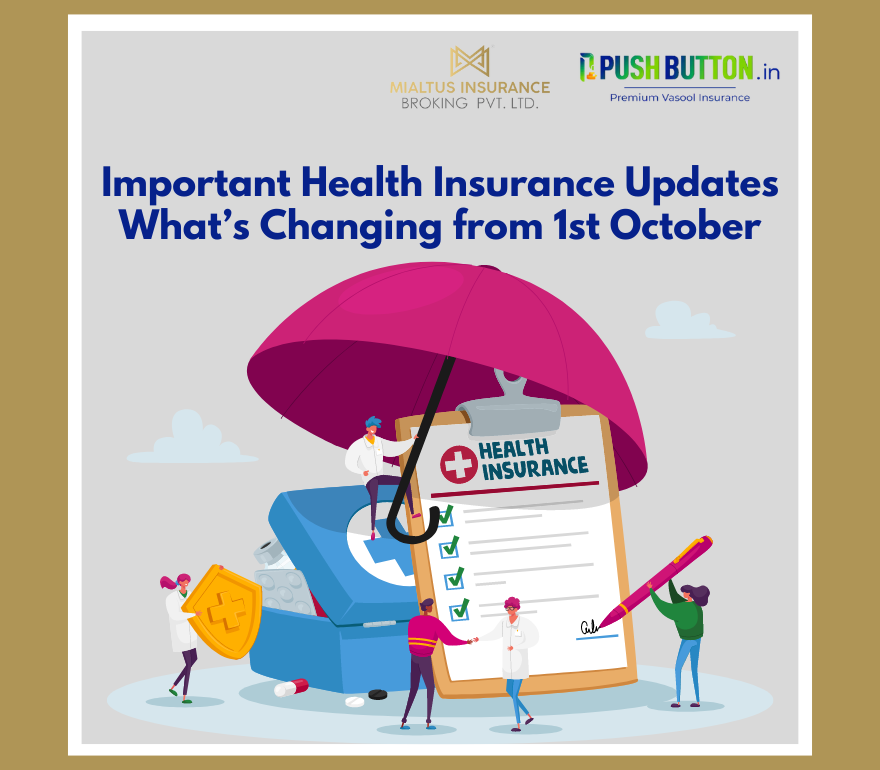
As of October 1, 2024, health insurance policies have become more favourable for customers.
Here are the key updates in health insurance regulations, making it easier to explain to potential buyers.
Key Updates in Health Insurance Policies:
-
Shorter Waiting Period for Pre-Existing Conditions
The waiting period for pre-existing conditions has been reduced from 48 months to 36 months. After this period, insurance companies cannot reject claims for pre-existing conditions, even if the policyholder didn’t disclose the condition earlier.
-
No Age Limit for Senior Citizens
Before, people over 65 couldn’t buy new health insurance. Now, there’s no age limit, so anyone—regardless of their age—can purchase a health policy.
-
Inclusive Health Coverage
Insurance companies must now offer health insurance to mental health patients, special needs children, transgenders, and people with HIV/AIDS. This makes health insurance more inclusive.
-
No Claim Denials After 5 Years
Insurance companies cannot deny claims after 5 years, even for reasons like non-disclosure or misrepresentation. However, if there’s proven fraud, the claim can still be contested in court.
-
Meaningful Discounts for No Claims
If no claims are made during the year, policyholders can choose between increasing the sum insured or getting a discount on their premium for the next year.
-
Refund Anytime
Policyholders can cancel their policy anytime and get a refund based on how long they used the policy. For example, if you pay Rs. 12,000 in premium and cancel after six months, you’ll get Rs. 6,000 back.
-
Higher Claim Settlement Chances
IRDAI has asked insurance companies to set up a committee called Claims Review Committee (CRC). This committee will review the claims, which are rejected by the insurer.
Further, claim requests can only be rejected after approval of this committee. Also, insurers will have to give reason for rejection along concerning the specific terms and conditions of the policy document.
-
Smoother Claim Settlement Process
Insurance companies and Third-Party Administrators (TPAs) must collect required documents directly from the hospital, so policyholders don’t have to submit them separately. Also, cashless claims should be processed within 1 hour, and final payments made within 3 hours of discharge.
At Mialtus Insurance Broking Pvt Ltd, we understand the challenges of maintaining good health and the importance of having comprehensive coverage. Contact us for the best health insurance policies and claim services. Our health insurance policies are designed to give you peace of mind, ensuring you and your family are protected during times of illness or medical emergencies. Call us on 8657528106 or visit our website to learn more about our customer-friendly health insurance plans.
India, known for its dynamic and diverse economy, is witnessing a significant transformation in the health insurance industry. Insurance brokers are making health insurance more accessible and user-friendly.
Big Changes in Health Insurance
The Insurance Regulatory and Development Authority of India (IRDAI) has introduced new rules to make health insurance easier and better for everyone. Mialtus Insurance is promoting these changes to ensure their customers can benefit.
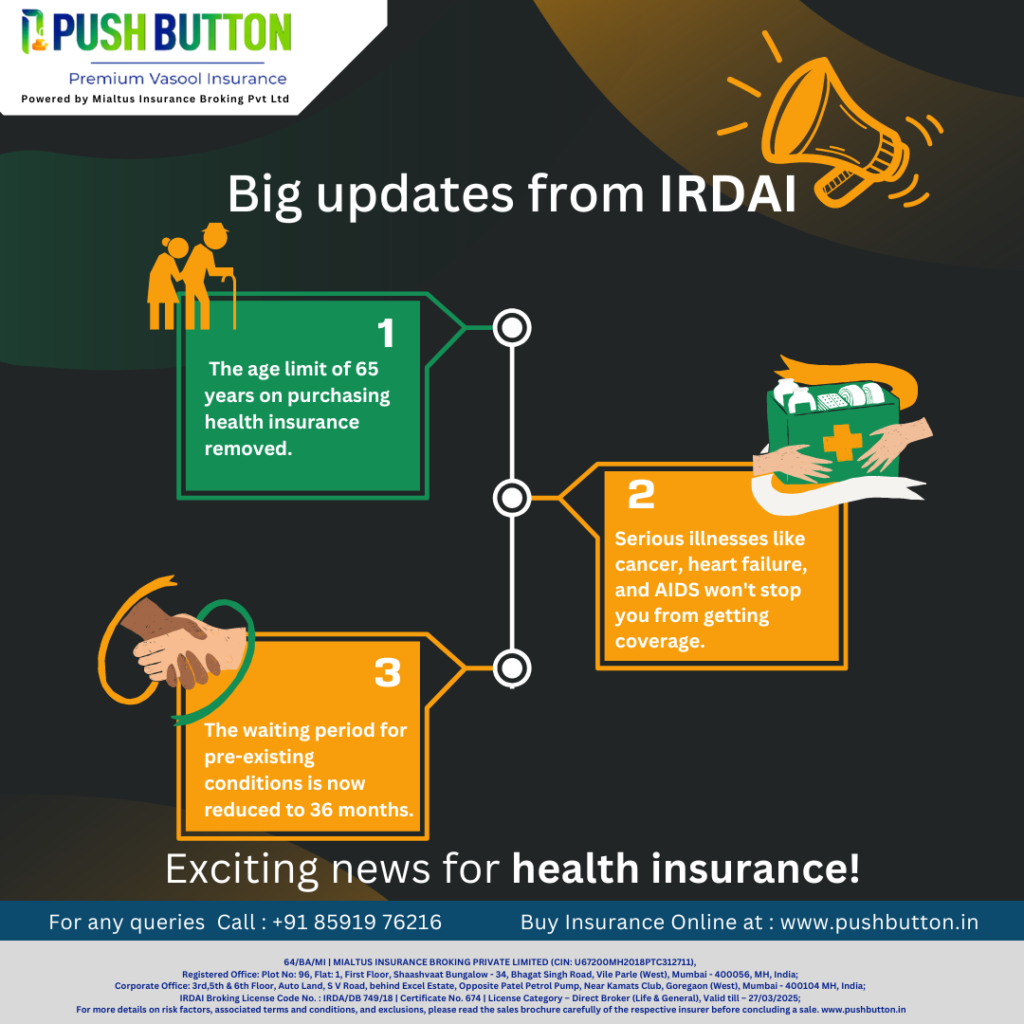
Here are the three main updates:
-
No More Age Limit for Health Insurance
Previously, people over 65 had trouble getting health insurance. This left many older people without protection. Now, the age limit has been removed, meaning anyone can get health insurance regardless of age. Mialtus Insurance is helping older clients understand and use this new policy.
-
Coverage for Serious Illnesses
Serious health issues like cancer, heart failure, and AIDS often make it hard to get insurance. These conditions need expensive treatments, leaving many people financially burdened. The new rules now allow coverage for these severe illnesses. Mialtus Insurance informs clients that they can get the financial help they need even with serious health problems.
-
Shorter Waiting Period for Pre-existing Conditions
Before, if you had a pre-existing health condition, you had to wait a long time before your insurance would cover it. Now, the waiting period has been reduced to 36 months. This means you can get coverage for pre-existing conditions sooner. Mialtus Insurance is ensuring their clients know about this shorter waiting time and how it benefits them.
How Emerging Insurance Brokers Are Making a Difference
Insurance brokers like Mialtus Insurance are changing the game by making health insurance more accessible and understandable.
Here’s how they are helping:
-
Educating Customers
Many people don’t fully understand health insurance. Mialtus Insurance is working hard to educate their clients about the new IRDAI rules and how they can benefit from them. They explain everything in simple terms so everyone can understand their options.
-
Personalized Service
Unlike traditional insurance agents, new brokers offer services tailored to each person’s needs. Mialtus Insurance takes the time to understand their clients’ health and insurance needs to provide the best possible coverage.
-
Innovative Solutions
The insurance industry is changing, and brokers like Mialtus Insurance are leading the way with new and creative solutions. They use digital platforms to make managing policies easier and offer unique insurance products for different needs.
-
Client Advocacy and Support
Mialtus Insurance doesn’t just sell policies; they also support their clients, especially when it comes to making claims. They make sure clients get the best terms and feel supported throughout the process.
The Future of Health Insurance in India
The new IRDAI rules are a step towards making health insurance more inclusive and customer-friendly. Emerging insurance brokers like Mialtus Insurance are at the forefront of this change, ensuring more people have access to good health coverage.
We continue to innovate and adapt, and the future of health insurance in India looks bright. With better awareness, improved coverage options, and a focus on customer satisfaction, health insurance is becoming more reliable and easier to understand.
In conclusion, the rise of new, customer-focused insurance brokers in India is a great development for the health insurance industry. By embracing new rules and focusing on what customers need, brokers like Mialtus Insurance are making health insurance easier and more beneficial for everyone. As they continue to lead the way, their positive impact will be felt across the entire industry, setting new standards for excellence and customer service.
As a small business owner or startup entrepreneur, you pour your heart and soul into building your dreams. But what if disaster strikes and your hard work goes up in flames? That’s where fire insurance comes in – offering a crucial safety net to protect your business from the unexpected.

Understanding Fire Insurance: A Lifeline for Small Businesses
Fire insurance is more than just a piece of paper – it’s your lifeline in times of crisis. It provides financial protection against the devastating effects of fire damage to your business premises, inventory, equipment, and more. For small businesses and startups, where every penny counts, having the right fire insurance policy can mean the difference between survival and closure.
Why Small Businesses Need Fire Insurance
Imagine this scenario: Your cozy café, bustling with customers and filled with the aroma of freshly brewed coffee, suddenly engulfed in flames. Without fire insurance, the cost of rebuilding your business from scratch could spell bankruptcy. But with the right policy in place, you can bounce back quickly, minimizing financial losses and keeping your dreams alive.
Key Benefits of Fire Insurance for Small Businesses
- Financial Protection: Fire insurance covers the cost of repairing or rebuilding your business premises, replacing damaged inventory and equipment, and even compensating for lost income during the downtime.
- Peace of Mind: With fire insurance, you can rest easy knowing that your business is protected against the unpredictable nature of fire accidents.
- Business Continuity: In the event of a fire, having insurance coverage means you can get back on your feet faster, minimizing disruption to your operations and retaining customer trust.
Choosing the Right Fire Insurance Policy
When it comes to fire insurance, one size doesn’t fit all. As a small business owner or startup, it’s crucial to choose a policy that aligns with your unique needs and budget. Here are some key factors to consider:
- Coverage Limits: Make sure your policy provides adequate coverage for your business assets, including buildings, inventory, equipment, and any other valuable assets.
- Exclusions: Pay attention to any exclusions or limitations in the policy, such as coverage for certain types of property or specific causes of fire.
- Claims Process: Look for an insurance provider with a streamlined claims process and a reputation for reliability and promptness in handling claims.
- Cost vs. Value: While affordability is important, don’t skimp on coverage just to save a few bucks. Invest in comprehensive coverage that offers maximum value for your money.
Conclusion:
Protect Your Business, Protect Your Dreams
In the unpredictable world of small business ownership, fire insurance is your best defence against the unforeseen. Don’t wait until disaster strikes – take proactive steps to safeguard your business and preserve your dreams for the future. With the right fire insurance policy in place, you can focus on what you do best – building and growing your business – with the peace of mind that comes from knowing you’re protected.
Remember, your business is more than just a source of income – it’s a reflection of your passion, dedication, and entrepreneurial spirit. Protect it, nurture it, and watch it thrive with the security of fire insurance by your side.
For personalized guidance and assistance in choosing the right fire insurance policy for your small business or startup, reach out to our team of experts today. We’re here to help you protect your dreams and build a brighter future, one flame at a time.






 ISO Certified: 9001 – 2015