

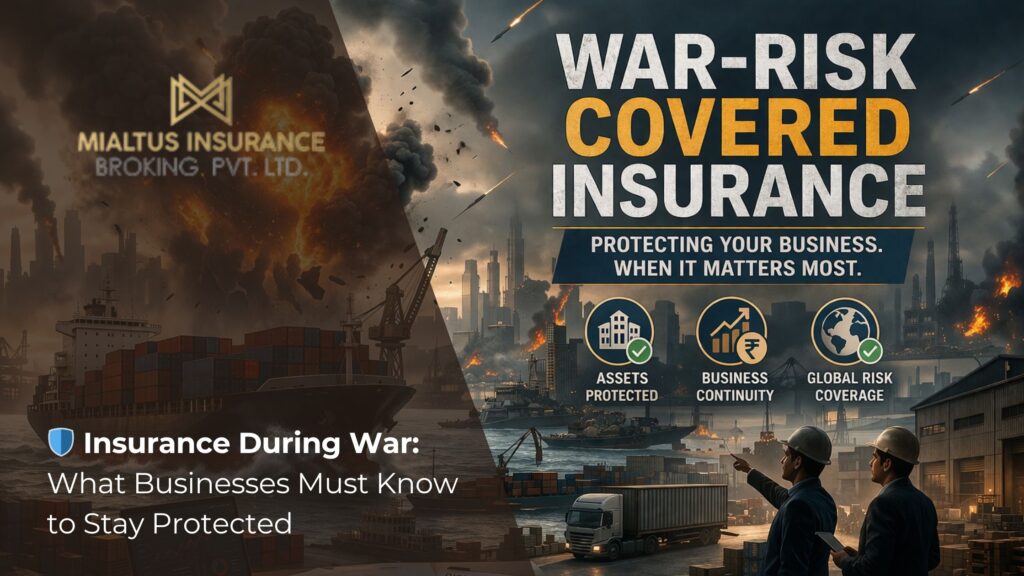
Introduction: The Risk Most Businesses Overlook
When we think about war, we often think in terms of borders, politics, and global headlines. But for businesses, the impact is far more direct and often far more damaging. Supply chains get disrupted. Shipments are delayed or destroyed. Operations come to a halt. Physical assets can be damaged without warning.
What many businesses don’t realize is this: most standard insurance policies do not cover war-related risks. This means that in times of conflict, companies can face massive financial losses without any protection.
The good news? There are ways to stay protected if you choose the right kind of coverage. In this article, we’ll walk you through three essential insurance solutions that can help safeguard your business during war or conflict situations.
🛡️ Insurance Solutions That Can Cover War Risks
While standard policies exclude war, certain insurance solutions offer specific extensions or add-ons designed to cover these risks. Let’s look at three key types of insurance that can make a real difference during uncertain times.
🚢 Marine & Cargo War Insurance
What It Covers
Marine & Cargo War Insurance is designed to protect goods while they are in transit during war or conflict situations.
It can cover:
- Damage to cargo due to war-related incidents
- Loss of goods caused by attacks, explosions, or seizure
- Disruptions in shipping routes due to conflict zones
Why It Matters
During war, global trade becomes highly unpredictable. Shipping routes may be blocked, ports may shut down, and cargo may be exposed to serious risks. Without war coverage, any loss during transit is typically not covered under standard marine insurance.
Who Should Consider It
- Exporters and importers
- Manufacturers dependent on global supply chains
- Businesses involved in international trade
🏭 Business Interruption Insurance (With War Extension)
What It Covers
This policy helps protect your income if your business operations are disrupted due to war-related events.
It can include:
- Loss of revenue due to forced shutdowns
- Supply chain disruptions
- Delays in operations caused by conflict
Why It Matters
In many cases, businesses are not physically damaged but they still cannot operate. And then operations stop, revenue stops. This type of insurance ensures that your business can survive financially during periods of disruption.
Real-World Scenario
Your factory may not be directly affected by conflict, but your suppliers are. Raw materials stop arriving, and production halts. Even without physical damage, your business suffers daily financial losses.
Who Should Consider It
- Manufacturing companies
- Businesses dependent on continuous operations
- Companies with complex supply chains
🏢 Property Insurance with War Add-ons
What It Covers
This insurance protects your physical assets against damage caused by war-related incidents.
It can include:
- Damage to buildings and infrastructure
- Loss or damage to machinery and equipment
- Impact from nearby explosions or conflict-related events
Why It Matters
For many businesses, physical assets represent a significant investment. Standard property insurance will not cover war-related damage unless a specific add-on is included. Without this coverage, rebuilding or repairing assets can become a major financial burden.
Who Should Consider It
- Warehouse owners
- Industrial units
- Businesses with high-value physical assets
📊 Quick Comparison
| Insurance Type | What It Protects | Key War Risk Covered |
| Marine & Cargo War Insurance | Goods in transit | Damage or loss during shipping |
| Business Interruption (War Extension) | Business income | Operational shutdowns |
| Property Insurance (War Add-on) | Physical assets | Damage to buildings & equipment |
🧠 Choosing the Right Coverage for Your Business
There is no one-size-fits-all solution when it comes to war risk insurance.
The right coverage depends on:
- The nature of your business
- Your exposure to international markets
- Your reliance on physical assets or supply chains
In most cases, businesses benefit from a combination of these insurance solutions rather than relying on just one. The key is to assess your risks properly and ensure that critical areas of your business are protected.
Mialtus Insurance Broking
At Mialtus Insurance Broking, we work closely with businesses across India to help them navigate complex and often overlooked risks.
As an insurance broker with tie-ups with leading insurance companies, we assist in:
- Identifying gaps in existing coverage
- Customizing insurance solutions based on business needs
- Providing access to specialized policies, including war risk coverage
Our focus is simple help businesses stay protected, even in uncertain and high-risk situations.
Conclusion: Be Prepared
War and conflict are unpredictable, but the financial risks they create can be managed with the right planning. Relying only on standard insurance policies can leave your business exposed when it matters the most. If your business has exposure to global markets or operational risks, now is the right time to review your insurance coverage and ensure you’re prepared for the unexpected.
For many small and mid-sized businesses, the office is far more than a rented space or a unit in a commercial tower. It holds computers, records, furniture, fit-outs, cash, visiting clients, and the day-to-day rhythm of the business itself. When a fire, burglary, electrical fault, flood, or liability incident interrupts that rhythm, the financial impact can be sharp and immediate. That is why office package insurance has become a practical risk solution for SMEs across India.
Protection built for real office risks
An SME office faces a distinct mix of exposures. In Mumbai, heavy rain and water ingress can damage interiors and equipment. In Bengaluru or Hyderabad, technology-driven offices may be more exposed to equipment breakdown and data-related risk. In Delhi NCR, a visitor injury claim or damage to expensive office interiors can create an unexpected cost. Even a smaller office with limited staff may carry a meaningful asset value once furniture, laptops, printers, air-conditioners, networking devices, and décor are counted properly.
A well-structured office package policy brings these risks under one umbrella. Instead of buying separate covers for property, burglary, electrical items, cash, liability, and employee accident, SMEs can combine relevant sections in one policy and shape the sum insured to match their actual exposure.
This works especially well for growing businesses that want clarity, cost control, and a cleaner renewal process.
What this policy usually includes
Office package insurance is designed to protect both the physical setup and the business activity linked to that setup. The exact sections vary by insurer, though the policy usually starts with fire and allied perils cover for office contents and may extend to burglary, electronic equipment, plate glass, sign boards, money cover, and liability.
A broader version can also include business interruption, which helps when a covered incident halts operations and affects income. For an SME, this part often matters just as much as asset replacement, because fixed expenses do not stop when the office does.
Typical sections often include:
- Fire and allied perils: Furniture, fixtures, interiors, office contents, and in some cases the building portion if owned
- Burglary and housebreaking: Loss of insured assets after forced entry or violent entry
- Electronic equipment: Computers, servers, printers, networking devices, and sudden accidental damage or breakdown
- Public liability: Injury to visitors or damage to third-party property at the office premises
- Money cover: Cash in safe, cash in transit, or loss during handling, subject to policy terms
- Glass breakage
- Signage damage
- Portable laptops
- Employee personal accident
- Fidelity risk
A quick view of key cover sections
The right mix depends on the kind of office you run, the asset value inside it, and how dependent you are on uninterrupted operations.
| Cover section | What it protects | Who should pay close attention |
|---|---|---|
| Fire and allied perils | Interiors, furniture, fixtures, equipment, contents | All SMEs |
| Burglary | Theft after forcible entry, damaged locks and premises | Offices with electronics, stock, or high-value assets |
| Electronic equipment | Servers, desktops, laptops, printers, EPABX, network devices | IT, consulting, design, professional firms |
| Money insurance | Cash in safe or transit | Retail offices, collection-heavy businesses |
| Public liability | Visitor injury or third-party property damage | Client-facing offices, clinics, agencies, training centres |
| Business interruption | Loss of income and continuing expenses after a covered event | Any SME with fixed overheads and time-sensitive contracts |
| Group personal accident | Financial support in case of employee injury | Businesses with travel, field staff, or larger office teams |
Why a package format makes sense for SMEs
Buying one bundled office policy can be more practical than managing scattered covers from different insurers. Documentation is simpler, renewals are easier to track, and the risk picture is easier to review each year as the business grows.
It also helps avoid common gaps. Many businesses insure laptops but forget plate glass. They insure fire risk but leave out burglary. They cover contents, yet skip liability. A package policy reduces the chance of leaving out an important section simply because it sat in a different policy document.
When structured well, it gives SMEs a stronger base with room for sensible add-ons:
- Cyber extension: Useful for IT-enabled businesses, professional firms, and offices that hold client data
- Business interruption: Valuable where even a few days of closure can hurt revenue
- Employee dishonesty cover: Relevant where financial handling or stock movement is part of operations
- Portable equipment cover: Important for hybrid teams carrying laptops outside office premises
Cost, value, and what affects premium
Premiums are shaped by the sum insured, city, occupancy, construction details, claims history, and the sections chosen. As a broad market indication, an office package with a sum insured of around ₹50 lakh may start at a few thousand rupees per year, though the final premium can move up based on risk profile and optional covers.
For SMEs, the real question is not just what the premium is, but what a major uninsured incident would cost. Replacing office interiors, buying new systems, handling a liability claim, or paying rent while operations are paused can be far more expensive than the annual policy outlay.
A sensible buying process usually looks at:
- asset values
- nature of business activity
- location-specific hazards
- visitor footfall
- dependency on electronics
- need for continuity after a loss
Advisory support matters as much as the policy
The wording of an office package policy can look straightforward until claim time. That is where advice makes a visible difference. Mialtus Insurance Broking Pvt. Ltd. supports SMEs with policy comparison across insurers, risk review, section selection, and claims coordination, helping businesses choose cover that fits the way the office actually functions.
This is useful for firms that are scaling up, shifting offices, taking higher-value fit-outs, or moving into client-heavy spaces. A broker-led review can help identify whether a business needs only a basic office cover or a broader package with business interruption, liability, portable equipment, cash, or employee-related extensions.
The value is not only in getting quotes. It is also in unbundling the policy wording, setting realistic sums insured, checking exclusions, and avoiding both underinsurance and unnecessary spend.
When a claim happens
Claims support is where the policy becomes real. After an incident, the first few hours matter. Prompt intimation, proper documentation, and clear communication with the insurer can influence how smoothly the matter moves.
In most cases, the process follows a standard path: notify the insurer or broker, register the claim, submit the claim form and supporting papers, allow survey or inspection, respond to queries, and then receive settlement as per terms and assessment. For an SME already dealing with disruption, coordinated support during this stage can save time and reduce stress.
Good claim handling usually starts with simple habits inside the business:
- keep asset registers updated
- retain purchase invoices where possible
- document fit-outs and equipment with photos
- report incidents immediately
- preserve evidence after a loss, unless safety requires urgent removal
Choosing the right cover for your office
No two SME offices carry the same exposure. A CA firm in South Mumbai, a design studio in Pune, an IT office in Noida, and a distributor’s branch office in Ahmedabad will not buy the same policy in the same way. The right plan depends on what sits inside the premises, who visits it, what could stop operations, and how fast the business needs to recover after a loss.
That is why office package insurance works best when it is reviewed as a business protection tool, not as a box-ticking purchase. A thoughtful structure can protect assets, income, and liability in one place, while still staying cost-aware.
If your office holds critical equipment, client-facing operations, or a meaningful investment in interiors and infrastructure, this is a good time to review whether your current cover is basic, partial, or genuinely fit for the risks your business carries today.
Understanding Employee Life Insurance Benefits
When an organisation wants to protect its people in a meaningful way, salary alone is rarely enough. Employees also look for financial security for their families, especially in a market where medical costs, loans, school fees, and household commitments can put real pressure on a family after an unexpected loss.
Group term life insurance offers a practical answer. It gives employees life cover under a master policy issued to the employer, usually at competitive group rates, with simple administration and broad eligibility. For businesses in India, it is one of the most effective ways to add substance to the employee benefits programme without creating unnecessary complexity.
What this cover means for employers and employees
Group term life insurance is a pure protection plan for a defined employee group. If an insured employee passes away during the policy term, the nominee or beneficiary receives the agreed sum assured, subject to policy terms and conditions.
Unlike savings-linked life insurance, this cover is focused on one clear outcome: immediate financial support to the family. That simplicity is exactly why many employers prefer it. It is easy to explain, easy to administer, and easy for employees to value.
For employees, the benefit is direct. They receive life cover without the pricing and paperwork that often come with individual policies. For employers, it supports workforce care, strengthens the benefits package, and adds a layer of social responsibility to compensation design.
Why businesses in India choose it
In many Indian organisations, group term life insurance sits alongside group health insurance as a core employee benefit. It is relevant for large corporates, growing SMEs, professional firms, and businesses with geographically spread teams.
After reviewing workforce needs, employers often choose this cover for reasons like:
- financial security for dependants
- affordable group pricing
- simple onboarding through HR
- stronger employee confidence
- better value in the benefits mix
There is also a strong retention angle. Employees notice when an employer has planned for their family’s welfare, not just their monthly payout. That creates trust, and trust tends to stay longer than a purely transactional salary increase.
How cover is usually structured
Most group term life plans are designed around a fixed benefit structure. The sum assured may be a flat amount for all employees, or it may be linked to salary, designation, grade, or a defined category within the workforce.
A common structure in India includes basic employer-funded cover, with an option for employees to buy additional voluntary cover through payroll deduction. This keeps the base benefit inclusive while giving flexibility to those who want higher protection.
| Feature | Group Term Life Insurance | Individual Life Insurance |
|---|---|---|
| Policyholder | Employer holds the master policy | Individual holds the policy |
| Premium | Often fully or partly paid by employer | Paid by the individual |
| Underwriting | Usually simplified for eligible employees | Often involves medical and financial checks |
| Coverage basis | Flat amount or salary multiple | Chosen by the policyholder |
| Portability | Usually linked to employment | Continues regardless of employer |
| Purpose | Employee benefit and family protection | Personal long-term financial planning |
This comparison matters because group term cover is not meant to replace personal life insurance in every case. It works best as a strong workplace benefit, while some employees may still choose separate personal cover for larger financial goals.
How the policy works inside a company
The process is usually straightforward when the plan is designed well. Eligible employees are enrolled through HR during onboarding, policy renewal, or a defined benefits window. The employer shares employee data with the insurer through the broker, and the policy is issued under an agreed structure.
In many cases, standard coverage does not require individual medical tests, which helps organisations insure a large population quickly. This is especially useful for companies with scale, multi-city teams, or fast hiring cycles.
The operational flow usually looks like this:
- Eligibility: Full-time employees, or another defined category, become part of the group as per company policy
- Sum assured: Cover may be fixed at a flat amount or linked to salary multiples
- Premium funding: The employer may bear the full cost, or employees may contribute for additional cover
- Policy term: Most plans are annual and renewed each year
- Claim payment: On a valid claim, the insurer pays the nominee or beneficiary as per the policy terms
One important point needs to be communicated clearly to employees. Group term life insurance is generally tied to employment. If an employee leaves the organisation, the cover typically stops unless a conversion or continuation option is available under that policy.
Add-ons that can make the cover stronger
A well-designed plan can go beyond basic life cover. Depending on insurer options and workforce needs, employers may add riders or supporting benefits to create a more rounded protection framework.
These choices are often considered after reviewing demographics, salary bands, job roles, and budget:
- Accidental death benefit: Extra payout in case of accidental death
- Critical illness rider: Added support on diagnosis of specified illnesses
- Disability-related benefits: Financial relief after defined disability events
- spouse or dependent add-on options
- voluntary top-up cover for senior employees or key staff
Not every workforce needs every rider. The right approach is usually to keep the base policy clear and strong, then add features that match the risk profile of the employee base.
Why broker-led design makes a difference
Group term life insurance looks simple on the surface, but the quality of the plan depends on how it is structured. Small decisions can affect premium, claims experience, employee communication, and long-term value.
That is where a broker brings clarity. Mialtus Insurance Broking Pvt. Ltd., with its pan-India presence across corporate and retail insurance solutions, supports employers with insurer comparison, benefit structuring, policy placement, renewals, and claims coordination. The focus is not just on obtaining a quote, but on making the cover clear, relevant, and workable for the business.
This is especially useful when an organisation needs to decide between flat cover and salary-linked cover, employer-paid and contributory models, or base protection versus layered protection with riders. A broker can also help assess whether the cover should differ by grade, location, or risk category, while keeping the plan fair and administratively practical.
Employee communication matters as much as policy wording
A strong policy can still feel invisible if employees do not know what it covers. Many businesses invest in insurance, then lose impact because the benefit is poorly communicated.
Employees should know:
- who is covered
- how much cover applies
- who can be nominated
- when the cover starts and ends
- how a claim is reported
Clear communication improves appreciation of the benefit and reduces confusion during difficult situations. In life insurance, that matters a great deal. When a claim arises, families need direction, not uncertainty.
Claims support is where service becomes real
The true value of group term life insurance is felt at claim stage. A policy document is important, but timely guidance, correct documentation, and compassionate coordination are what families remember.
A broker-led support model can help employers and nominees with claim notification, document review, follow-up with the insurer, and status tracking. This reduces delays and gives HR teams a structured process during a sensitive event.
For many organisations, this support is a major reason to work with an experienced insurance broking and risk advisory partner. Pricing matters, but service during a claim matters more.
A practical fit for growing organisations
Indian businesses are becoming more thoughtful about total rewards. Employees compare not only pay packages, but also the quality of protection offered to their families. Group term life insurance fits this shift well because it is measurable, meaningful, and cost-aware.
It works for a wide range of businesses:
- startups building a credible benefits base
- SMEs improving retention
- large corporates formalising grade-wise cover
- professional firms protecting key talent
With the right structure, this benefit can support employee wellbeing, strengthen employer brand, and bring discipline to risk protection across the workforce.
For organisations reviewing employee benefits, the next step is usually not just buying a policy, but choosing the right cover design, insurer terms, communication plan, and claims support model. That is where careful broking advice can turn a standard policy into a dependable employee protection solution.
Construction projects in India face a wide range of uncertainties long before handover. A heavy monsoon can damage partially completed works, theft can hit site materials, an accidental collapse can affect neighbouring property, and a single event can put timelines, budgets, and contract obligations under pressure. For contractors, project owners, lenders, and subcontractors, that exposure is too large to leave unmanaged.
That is where this form of engineering insurance becomes valuable. It is built for civil construction and infrastructure works, giving financial protection against sudden and unforeseen physical loss or damage during the course of the project. When arranged well, it does more than satisfy tender conditions. It supports project continuity, funding confidence, and faster recovery after a setback.
Why this cover matters on Indian project sites
In India, many contracts require this insurance before work begins, often in the joint names of the contractor and the principal. This is common across residential towers, industrial units, roads, bridges, warehouses, plants, schools, hospitals, and mixed-use developments. The reason is simple: construction risk is dynamic, and a single uninsured incident can interrupt cash flow for every stakeholder involved.
A well-structured policy can protect works in progress, site materials, temporary structures, and in many cases third-party liability arising from construction activities. For businesses operating in cities like Mumbai, Pune, Bengaluru, Chennai, Hyderabad, Delhi NCR, Ahmedabad, Kolkata, and emerging infrastructure corridors, this protection can be a practical part of project governance rather than just an insurance formality.
What is usually covered
The core idea is broad protection for accidental physical loss or damage, subject to the policy wording and exclusions. Cover usually starts from unloading of materials at site or commencement of work, and continues through construction, erection where applicable, and sometimes an agreed testing or maintenance period.
The scope can vary by insurer, project type, and extensions selected. A building project, a tunnel package, and a renewable energy installation will not be rated or worded in exactly the same way.
| Coverage area | What it generally includes | What should be checked carefully |
|---|---|---|
| Contract works | Buildings under construction, civil works, permanent and temporary works, site materials | Correct sum insured, stage values, escalation provision |
| Contractor’s plant and equipment | Certain site machinery and construction equipment, if included | Whether a separate plant and machinery policy is advised |
| Third-party liability | Injury to outsiders or damage to nearby property due to site operations | Limits of indemnity, defence costs, cross liability wording |
| Testing and commissioning | Accidental damage during initial testing of installed systems, where opted | Duration of testing cover and policy triggers |
| Maintenance period | Limited protection after completion for specified defects or damage, where endorsed | Scope of maintenance visit cover versus full maintenance cover |
| Debris and related costs | Removal of debris and site clean-up after an insured event | Sublimits, excess, and whether this is optional |
Risks that are especially relevant in India
Construction in India is shaped by geography, weather, density, and project complexity. A contractor working in a coastal belt may worry about cyclone and inundation. A project in the Himalayan region or parts of Gujarat may need close attention to earthquake exposure. Dense urban developments need careful liability cover because even a minor incident can affect adjoining properties, utilities, or passing pedestrians.
Common insured risks often include the following:
- Fire and explosion
- Flood and inundation
- Storm, cyclone, and tempest
- Earthquake and landslide
- Theft and burglary of site materials
- Collapse, impact, and accidental damage
- Malicious damage
- Third-party injury or property damage, if covered
This is why the policy should reflect the site itself, not just the contract value on paper. Soil conditions, water table, storage practices, labour intensity, access roads, local exposure to flooding, and proximity to existing structures all matter when insurers assess the risk.
Who should consider it
This insurance is relevant across the construction chain, not only for the main contractor. In many projects, more than one party has a financial stake in the same work, and the wording needs to recognise that clearly.
Typical stakeholders include:
- Main contractors: for protection of works, materials, and contractual exposure
- Project owners or principals: to support project continuity and reduce financial disruption
- Subcontractors: where their scope, equipment, or liability needs to be recognised
- Lenders and investors: where funding terms call for robust insurance support
- EPC and infrastructure participants: where project values, interfaces, and delay pressures are high
What is often excluded or restricted
No policy covers everything. Standard exclusions usually apply to war-type perils, nuclear risks, normal wear and tear, gradual deterioration, wilful acts, and losses linked to stoppage of work. Faulty design, defective material, or poor workmanship may also be excluded fully or partly, depending on the wording and the nature of the damage.
That makes policy review essential. A low premium may look attractive, but a narrow wording, high deductible, weak liability section, or missing extension can leave major gaps. This is particularly important for projects with imported equipment, strict completion clauses, or handover obligations that continue into a maintenance period.
How insurers assess premium and terms
Premium is usually linked to the sum insured, project duration, site location, method of construction, claims history, and the nature of the work. A short urban commercial fit-out is very different from a multi-year bridge package or a hillside retaining structure. Insurers also look at contractor experience, quality controls, fire protection, security arrangements, and exposure to natural hazards.
For Indian projects, these factors often influence pricing and underwriting terms:
- Location risk: flood plains, seismic zones, coastal exposure, remote access
- Project type: residential, industrial, infrastructure, tunnelling, power, marine-linked works
- Construction period: short tenure versus multi-year schedules
- Claims record: past losses, severity pattern, corrective actions taken
- Site controls: security, safety systems, storage management, housekeeping standards
The sum insured should usually reflect the full contract value and related site exposures. Depending on the project, businesses may also review escalation cover, debris removal, surrounding property, additional customs duty, express freight, and extended maintenance options.
Why advisory support matters
This is one of those covers where structure matters as much as price. The wording must match the contract, the stakeholders must be named correctly, and the declared values must stand up at claim stage. If the owner expects joint names, the lender expects noting of interest, and the contractor assumes testing cover is automatic, any mismatch can create delay when it matters most.
Working with an insurance broker can help bring clarity to that process. A broker can compare insurer options, review exclusions, map project-specific risks, and support claims documentation if a loss happens. For complex builds, that guidance can be useful from proposal stage itself.
Mialtus Insurance Broking Pvt. Ltd. supports businesses across India with insurance broking, risk management consulting, and claims support across corporate and retail lines. For construction and engineering risks, the focus is on practical policy structuring, clearer interpretation of cover, and long-term service rather than a one-time transaction. That approach is relevant for contractors and project owners who want confidence not only at placement stage, but also when site conditions change mid-project.
Choosing a policy with confidence
A sound buying decision starts with the project schedule, BOQ or contract value, method statement, and risk profile of the site. Once that is clear, the next step is to compare terms, not just quotations. Two policies with similar premiums can differ sharply in extensions, deductibles, claims conditions, and liability limits.
Before finalising cover, it is wise to review a few practical points:
- Named insureds: contractor, principal, subcontractors, lenders where required
- Policy period: start date, construction duration, testing period, maintenance extension
- Major perils: flood, earthquake, storm, theft, collapse, impact
- Liability section: suitable limits for neighbouring property and public exposure
- Claims readiness: reporting timelines, survey process, records to maintain on site
A project site moves fast. Insurance should keep pace with that reality, giving financial support when plans are interrupted and helping stakeholders stay focused on completion, safety, and commercial stability.
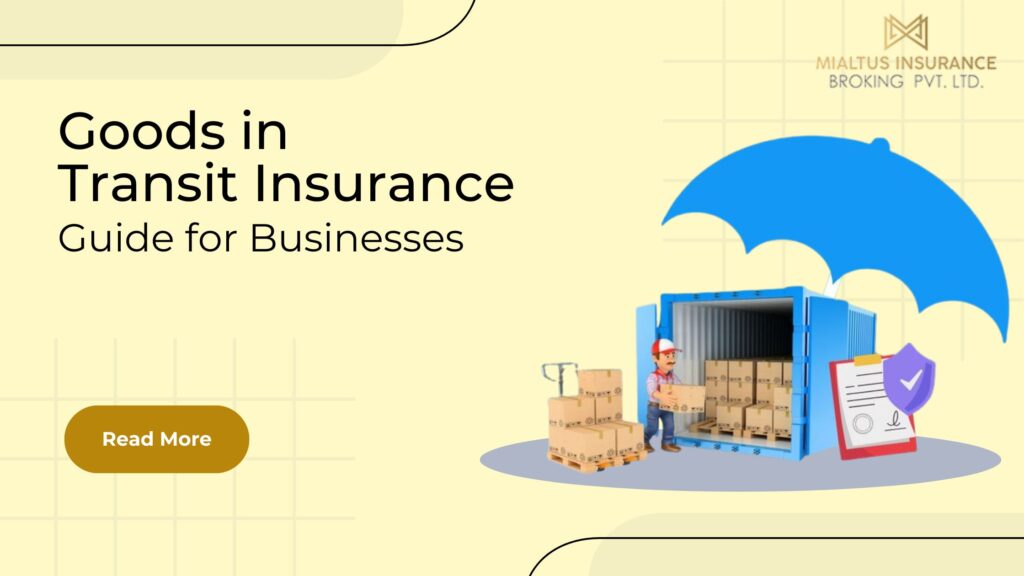
Businesses move products every day. Manufacturers send raw materials to factories. Wholesalers dispatch goods to retailers. E commerce sellers ship orders across cities and states. Every movement involves risk.Damage, theft, accidents, or mishandling during transport can lead to financial loss. Even a short distance shipment can face unexpected problems on the road.
Goods in transit insurance helps businesses manage this risk. For companies that rely on logistics to deliver products, this coverage plays an important role in protecting revenue and maintaining operational stability.
What is Goods in Transit Insurance
Goods in transit insurance is a policy that protects goods against loss or damage while they are being transported by road, rail, air, or other approved modes of transport. This type of insurance is commonly used by manufacturers, wholesalers, distributors, retailers, and logistics companies. Any business that moves physical products from one place to another can face transportation risks.
For example, a furniture manufacturer shipping products to dealers across India may face the risk of vehicle accidents or cargo damage. A D2C brand delivering online orders may face theft or package damage during transportation. Goods in transit insurance helps reduce the financial impact of such incidents.The policy ensures that businesses do not have to absorb the full cost of damaged or lost goods during transit.
What Does Goods in Transit Insurance Cover
Goods in transit insurance generally covers a wide range of risks that can occur during transportation. The exact coverage depends on the policy terms and the type of goods being transported.
One of the primary protections is against accidental damage. Goods may get damaged during loading, unloading, or while the vehicle is moving. Road accidents are another common risk. If a delivery truck meets with an accident and the goods are destroyed or damaged, the policy may cover the loss. The policy may also provide protection against theft or burglary during the journey. Cargo theft can occur during stops or while vehicles are parked overnight. In such situations, insurance helps businesses recover the value of the lost goods.
Natural events can also affect transportation. Heavy rain, floods, or other environmental conditions may damage goods in transit. Many policies include coverage for such events depending on the coverage type selected. Another important area of protection involves handling related damage. Goods can be affected while being loaded onto vehicles or unloaded at the destination. Insurance support helps businesses recover costs in such situations.
Overall, goods in transit insurance focuses on protecting the value of goods from the moment they leave the origin point until they safely reach their destination.
What Is Not Covered
While goods in transit insurance provides important protection, certain situations are usually excluded from coverage. Understanding these exclusions helps businesses avoid claim disputes later.
One common exclusion involves poor packaging. If goods are damaged because they were not packed properly before transportation, the insurer may reject the claim. Businesses must ensure that products are packed according to standard transport practices.
Another exclusion relates to delays in delivery. Insurance typically covers physical damage or loss of goods. Financial loss caused by delayed shipments is usually not covered.
Normal wear and tear is also excluded. Goods may experience minor deterioration during regular transportation. Such natural changes are not considered insurable events.
Intentional damage or fraudulent actions by the insured party are also excluded from coverage. If loss occurs due to deliberate actions, the policy will not respond.
Certain high risk goods may also require special approval before coverage. Items such as fragile materials, hazardous substances, or very high value cargo may need specific policy conditions.
Understanding these exclusions helps businesses prepare better and maintain proper logistics practices.
Types of Goods in Transit Insurance
Different businesses have different transportation needs. Because of this, insurers offer several types of goods in transit insurance policies.
One common option is a single transit policy. This policy covers a specific shipment for a single journey. Businesses that transport goods occasionally often choose this option.
Another option is an annual transit policy. This policy covers multiple shipments throughout the year. Companies that transport goods frequently prefer this option because it simplifies administration and ensures continuous protection.
Carrier policies are another category. Logistics companies and transport operators often purchase these policies to protect goods they carry on behalf of their clients.
Businesses can also choose coverage based on geographic scope. Some policies cover transportation within a specific city or state. Others provide nationwide protection depending on the operational requirements.
Selecting the right type of goods in transit insurance depends on shipment frequency, cargo value, and business logistics structure.
Factors Affecting Premium
The premium for goods in transit insurance depends on several factors. Insurers assess these factors to determine the level of risk involved in transportation.
One of the main factors is the nature of the goods. Fragile items or high value goods may carry a higher premium because the risk of damage or loss is greater. The mode of transport also influences the premium. Road transport, rail movement, and air cargo involve different levels of exposure to risk. Distance and route conditions also matter. Longer transportation routes or routes passing through high risk areas may lead to higher premiums. Packaging standards can also affect pricing. Well packed goods reduce the risk of damage and may help keep premiums lower.
The claim history of the business is another important factor. Companies with frequent claims may face higher premiums compared to businesses with strong risk management practices.
Facts
1) 55 road accidents happen every hour in India.- Business Standards
2) ₹1,000+ crore worth of cargo is stolen in India every year. – FreightFox
3) 12,000+ vehicle fires are reported in India every year. – NCRB
4) Floods affect over 7 million hectares of land in India annually. – NDMA
5) Over 30% of logistics insurance claims come from cargo damage. – ITLN
Benefits of Goods in Transit Insurance
Goods in transit insurance provides several practical benefits for businesses that depend on logistics operations.
One of the biggest advantages is financial protection. If goods are lost or damaged during transport, the policy helps recover the value of the shipment. This prevents sudden financial losses.
Insurance also supports business continuity. When losses occur, businesses can recover quickly without disrupting supply chains or customer commitments.
Another important benefit is increased trust with partners. Retailers, distributors, and clients often prefer working with suppliers who protect shipments through insurance.
For companies involved in large shipments or high value goods, insurance also strengthens financial planning. It allows businesses to operate with greater confidence when moving inventory across regions.
Overall, goods in transit insurance helps businesses manage transportation risks while maintaining stable operations.
How Mialtus Insurance Broking Helps Businesses Stay Protected
Choosing the right goods in transit insurance requires more than simply buying a policy. Businesses must ensure that the coverage matches their logistics operations, cargo value, and transportation routes. Mialtus Insurance Broking works with businesses to design insurance solutions that address real transportation risks. The team helps companies evaluate their shipment patterns, identify exposure points, and select policies that provide meaningful protection. With the right insurance structure in place, businesses can move products with greater confidence and focus on growth while reducing the financial impact of unexpected transport risks.
Delhi has evolved into a powerful mix of corporate headquarters, fast growing startups, trading enterprises, and high net worth families. With rising regulatory scrutiny and increasing financial exposure, insurance awareness in the capital has matured significantly. Businesses are not just buying policies for compliance. Individuals are not choosing plans based only on premium. This shift has made the search for the Best Insurance Broker in Delhi more deliberate and informed.

In a market as competitive as Delhi, risk profiles vary widely. A logistics company faces different liabilities than a technology startup. A manufacturing unit operates under different exposures than a consulting firm. A capable corporate insurance broker in Delhi evaluates contracts, assets, employee strength, and operational risks before recommending coverage. Without structured advisory, gaps remain unnoticed until a claim arises.
For individuals, clarity is critical. A reliable health insurance broker Delhi families can trust will explain exclusions, sub limits, waiting periods, and claim processes in clear terms. Insurance should reduce uncertainty, not create confusion. The Best Insurance Broker in Delhi focuses on education as much as placement.
Three qualities consistently define a dependable advisor. Transparency in insurer comparisons and pricing. Personalized recommendations based on risk assessment, not generic packages. Strong claim support that protects client interests during disputes or delays. An experienced SME insurance consultant in Delhi also conducts periodic reviews to ensure coverage keeps pace with business growth.
Mialtus Insurance Broker delivers structured insurance advisory services in Delhi with a consultative approach. Their team prioritizes risk mapping, policy optimization, and long term cost efficiency. Instead of pushing products, they align insurance strategy with business objectives and personal financial goals. This disciplined method reflects what clients expect from the Best Insurance Broker in Delhi.
If you are reviewing your coverage or expanding operations, evaluate your broker carefully. Work with a partner who understands Delhi’s dynamic risk environment and can guide you with clarity and accountability.
Gujarat has long been one of India’s strongest industrial engines. From manufacturing hubs in Ahmedabad and Vadodara to thriving SMEs in Surat and Rajkot, the state runs on enterprise. With growth comes exposure to risk. Fire, liability, marine transit, employee health costs. Insurance awareness in Gujarat has evolved, and businesses now look for structured guidance, not just policies. That is why finding the Best Insurance Broker in Gujarat has become a serious decision.

Insurance is not a commodity. It is a financial safeguard. The right corporate insurance broker in Gujarat studies your operations, contracts, and risk exposure before recommending coverage. A factory owner needs a different strategy than a tech startup. An exporter faces different risks than a local trader. A capable SME insurance consultant in Gujarat understands these nuances and designs protection accordingly.
Individuals also need clarity. A dependable health insurance broker Gujarat families can trust will explain policy wordings, exclusions, waiting periods, and claim processes in plain language. Transparent comparisons matter. So does honest advice when a policy does not fit your needs.
The Best Insurance Broker in Gujarat stands out through three qualities. First, transparency in premium breakdowns and insurer terms. Second, personalized advisory backed by real risk assessment. Third, strong claim support. Claims are where service quality is truly tested. A broker who negotiates with insurers and supports documentation can significantly reduce stress during difficult times.
Mialtus Insurance Broker approaches insurance as a structured advisory function. Their team provides insurance advisory services in Gujarat that focus on risk mapping, policy optimization, and long term cost control. Instead of pushing products, they align coverage with business realities. That consultative mindset is what businesses expect from the Best Insurance Broker in Gujarat.
If you are reviewing your coverage or expanding operations, evaluate your risks carefully. Work with a broker who understands Gujarat’s business environment and can guide you with clarity and accountability.
Karnataka, especially Bengaluru, has emerged as one of India’s fastest-growing business and technology hubs. With a strong startup ecosystem, expanding SMEs, and rising awareness about financial security, the demand for reliable insurance advisory services in Karnataka has grown significantly. In such a competitive market, choosing the right insurance broker can make a meaningful difference.

If you are searching for the best insurance broker in Karnataka, it’s important to look beyond just policy pricing. The right broker should understand local business risks, individual protection needs, and evolving regulatory guidelines. That’s where Mialtus Insurance Broker brings value.
At Mialtus, the focus is not just on selling policies but on building long-term relationships. Every client whether an entrepreneur, corporate decision-maker, or individual policyholder—receives tailored advice based on their specific requirements. From health and life insurance to corporate risk management and property coverage, solutions are structured thoughtfully rather than offered as one-size-fits-all packages.
Transparency and clarity remain central to the approach. Insurance terms can often feel technical and overwhelming. A professional broker simplifies policy comparisons, explains exclusions clearly, and ensures clients understand what they are purchasing. This reduces surprises during claim settlement and builds trust.
Karnataka’s dynamic economy also demands proactive service. Businesses need guidance on liability insurance, employee health benefits, cyber risk coverage, and asset protection. Individuals seek dependable health and life coverage with smooth claim assistance. A knowledgeable broker bridges this gap efficiently.
What differentiates a truly reliable insurance broker in Karnataka is responsiveness, market awareness, and genuine advisory support. Mialtus Insurance Broker aims to combine these strengths with personalized attention and ethical practices.
If you are evaluating insurance options in Karnataka and want structured guidance rather than sales pressure, consulting an experienced broker can help you make confident and informed decisions.

Cyber Insurance for Online Businesses
Introduction
If you run an online business, your storefront never closes. Your checkout works at midnight. Your customer data moves across servers in seconds. Your revenue depends on uninterrupted digital trust. That also means your risk is always live.
From D2C brands processing UPI payments to SaaS startups handling global client data, Indian digital businesses face constant cyber exposure. Attackers do not care about your company size. They care about access. Many founders invest in marketing, logistics, and growth. Few invest in structured online business cyber risk management. That is where cyber insurance for online businesses becomes critical. It is not just a compliance checkbox. It is a financial survival tool.
Unique Cyber Threats Facing Online Businesses Today
Online businesses face very different risks compared to traditional companies. Your entire revenue pipeline is digital. When systems fail, cash flow stops. Let us look at the threats that matter most.
Payment Gateway and UPI Fraud
India leads the world in real time digital payments. With UPI volumes crossing billions of transactions per month, fraudsters constantly checkout systems.
Common risks include:
• Fake payment confirmation screenshots
• API manipulation between payment gateway and website
• Business email compromise targeting finance teams
• Refund fraud on marketplaces
If you operate through Razorpay, Stripe, PayU, or UPI based checkouts, you face digital payment fraud risk daily. Under RBI digital payment guidelines, merchants are expected to maintain secure systems and incident reporting discipline. A breach does not just mean financial loss. It also means regulatory scrutiny. Cyber liability insurance can cover forensic investigation, fraud related losses, and legal defense expenses. Without it, you absorb the impact directly.
Data Breaches and Regulatory Exposure
Most online businesses collect more data than they realize. Customer names. Email IDs. Phone numbers. Addresses. Payment tokens. Sometimes Aadhaar or PAN for verification.
Under the Information Technology Act 2000 and CERT In incident reporting rules, certain cyber incidents must be reported within strict timelines. Failure to comply can attract penalties and reputational damage. Imagine a Shopify based D2C brand with 80,000 customer records. A database misconfiguration exposes that data publicly for 48 hours. Even if no hacker steals it, screenshots circulate online.
Now you face:
• Customer notification costs
• Legal notices
• PR crisis management
• Regulatory reporting obligations
Data breach protection under cyber insurance for online businesses covers these downstream costs. The breach itself hurts. The response costs often hurt more.
Ransomware and Operational Shutdown
Ransomware attacks are no longer limited to large enterprises. Indian MSMEs and startups are frequent targets because their security maturity is lower. A typical scenario: Your website admin credentials get compromised through phishing. Attackers deploy ransomware. Your product database and order management system get encrypted.
You cannot process orders. Customers flood support. Ads continue running, but you cannot fulfil. Even 72 hours of downtime can mean lakhs in lost revenue for a scaling e commerce brand.
Cyber insurance can cover:
• Incident response experts
• Data restoration expenses
• Business interruption losses
• Ransom negotiation support where legally permitted
Ransomware attacks are operational attacks. They hit your revenue engine directly.
Third Party Vendor Vulnerabilities
Online businesses depend heavily on third party tools:
• Payment gateways
• CRM platforms
• Cloud hosting providers
• Marketing automation tools
• Logistics integrations
One weak vendor can expose your entire stack. If your email marketing provider gets breached and your customer list leaks, customers blame you. Not the vendor. Cyber insurance for online businesses often extends coverage to third party service provider failures, depending on policy wording. This is critical for SaaS startups and digital agencies managing client data.
What Cyber Insurance Covers for Online Businesses
Coverage varies by insurer, but strong cyber liability insurance policies typically address both first party and third-party risks.
First party coverage may include:
• Data breach response and forensic investigation
• System restoration costs
• Business interruption due to cyber incidents
• Crisis communication and PR support
Third party coverage may include:
• Legal defense costs
• Regulatory fines where insurable
• Customer compensation claims
• Contractual liability from clients
For SaaS companies serving global clients, this becomes even more important. A breach affecting EU or US customers may trigger cross border regulatory exposure. Cyber insurance does not replace cybersecurity controls. It strengthens your financial resilience when controls fail.
When and Why an Online Business Should Consider Cyber Insurance
Many founders ask, when is the right time? The honest answer is before your first serious incident.
You should actively evaluate cyber insurance for online businesses if:
• You process digital payments regularly
• You store customer or user data
• You run paid ads that drive real time traffic
• You depend on cloud infrastructure
• You serve enterprise clients who ask about cyber coverage
Enterprise clients increasingly require proof of cyber liability insurance in vendor contracts. Without it, you may lose deals. If your annual revenue crosses a few crores and more than 70 percent of your operations are digital, your exposure justifies structured protection.
Business Scenarios
Scenario 1, D2C Skincare Brand in Mumbai
A fast growing D2C skincare brand runs on Shopify and integrates with a payment gateway and multiple logistics partners. A fraudster exploits a checkout vulnerability and manipulates transaction responses. Over 10 days, the brand ships 300 orders for which payment never settles. Direct loss crosses 18 lakh rupees. Add investigation costs and legal consultation. The founder now pauses expansion plans to recover losses. With cyber insurance for online businesses, the fraud loss and forensic expenses would likely be covered within policy limits. Cash flow disruption reduces significantly.
Scenario 2, SaaS Startup Serving Global Clients
A Bengaluru based SaaS startup offers workflow automation to US clients. An employee clicks on a phishing link. Attackers access the admin panel and extract client data. One US client sues for breach of contract. Another terminates agreement.
The startup now faces:
• Legal defense costs abroad
• Regulatory inquiries
• Loss of future revenue
Cyber liability insurance can cover defense costs and settlement expenses. More importantly, insurers often provide breach coaches who manage communication and regulatory coordination.
Scenario 3, Online Educator Running Paid Cohorts
An online educator hosts paid programs and stores student details including payment records. Ransomware locks access to course materials two days before a live launch. Hundreds of students demand refunds. Revenue loss, refund processing, and reputational damage combine into a severe blow. Business interruption coverage under cyber insurance helps absorb revenue losses during downtime. Incident response experts accelerate system recovery.
A Practical Cyber Risk Readiness Checklist
Before buying cyber insurance for online businesses, assess your preparedness.
Use this checklist:
• Map what customer data you collect and where it is stored
• Review access controls for admin accounts
• Enable multi factor authentication across critical systems
• Audit payment gateway integrations
• Create an incident response plan aligned with CERT In reporting rules
• Train your team on phishing awareness
• Document third party vendor dependencies
• Maintain secure backups tested regularly
Insurers often ask detailed underwriting questions. Strong internal controls improve both insurability and claim outcomes. Think of insurance as the final layer. Security hygiene remains your first line of defense.
Conclusion
Digital businesses scale fast. Risk scales faster. Your brand reputation lives online. One viral post about a data breach can undo years of marketing investment. Cyber insurance for online businesses is not about fear. It is about preparedness. It converts unpredictable cyber shocks into manageable financial events.
If your revenue depends on digital infrastructure, you already carry cyber risk. The real question is whether you carry it alone. Build controls. Strengthen processes. Transfer residual risk intelligently. That is how you build financial resilience in the digital economy.
FAQs
- Is cyber insurance mandatory for online businesses in India?
It is not legally mandatory for most sectors. However, regulatory frameworks like the IT Act 2000 and sector specific guidelines may require strong incident management practices. Many enterprise clients now contractually require cyber liability insurance.
- Does cyber insurance cover digital payment fraud
Many policies cover digital payment fraud and related investigation costs, subject to policy terms. Coverage depends on how the fraud occurred and your internal controls.
- Can small e commerce businesses buy cyber insurance?
Yes. MSMEs and startups can purchase cyber insurance for online businesses. Insurers increasingly offer tailored policies for smaller digital companies.
- Does cyber insurance replace cybersecurity tools
No. It complements them. Cyber insurance provides financial protection after an incident. Firewalls, encryption, monitoring, and employee training reduce the chance of an incident in the first place.
How Mialtus Insurance Broking Helps To Stay Protected
Buying cyber insurance for online businesses is not about picking the cheapest policy. It is about understanding your real exposure.
Our approach focuses on:
• Risk assessment based on your tech stack and payment flow
• Policy wording review to avoid hidden exclusions
• Alignment with Indian regulatory frameworks including CERT In reporting rules
• Claim advisory support during ransomware attacks or data breach events
• Coverage customization for global client contracts
Protect your revenue before the cyber incident hits.
Claim Ratio in Insurance for SMEs: Meaning, Types and Why It Matters
Imagine you run a small manufacturing unit in Pune. Or an IT services company in Bengaluru. Or maybe a wholesale trading business in Delhi.
When you buy business insurance in India, you probably look at one thing first. The premium.
You compare quotes. You ask your accountant. You try to reduce cost.
That makes sense. Every rupee matters in an SME.
But here is what many business owners ignore. The claim ratio in insurance for SMEs.
You only realize its importance when a fire breaks out, stock gets damaged in transit, or a client files a liability case against your company.
At that moment, what matters is not how cheap your policy was. What matters is how the insurer handles claims.
In this article, you will understand:
• What claim ratio really means
• Different types like loss ratio in insurance, incurred claim ratio, claim settlement ratio, and combined ratio insurance
• Why it directly affects your business continuity
• How you can improve your SME insurance claims experience
Let us break it down in simple terms.
What is Claim Ratio in Insurance? Simple Explanation
Think of claim ratio like this.
Suppose an insurance company collects Rs 100 crore as premium from SMEs in a year.
Out of this, it pays Rs 70 crore as claims.
That means for every Rs 100 collected, Rs 70 goes back to customers as claim payments.
This percentage is called the claim ratio.
In simple words, claim ratio tells you how much money the insurer pays back in claims compared to the premium it collects.
It helps you understand:
• Is the insurer actually paying claims?
• Is it financially stable?
• Is it pricing policies correctly?
For SMEs, this number gives a clue about how reliable the insurer may be during tough times.
But claim ratio is not just one number. There are different types. Each tells a slightly different story.
Why Claim Ratio is Important for Indian SMEs
You may wonder. If my policy is active, why should I worry about ratios?
Because when a loss happens, cash flow becomes critical.
Cash Flow Impact
Let us say your warehouse in Bhiwandi suffers water damage during heavy rains. Your stock worth Rs 40 lakh gets damaged.
You file a claim.
If the insurer delays or disputes the claim, your working capital gets stuck. Salaries, supplier payments, EMI, all get affected.
A healthy claim environment means faster recovery.
Risk Protection
Insurance is not an expense. It is a safety net.
If the insurer’s loss ratio in insurance is too low, it may mean claims are rarely paid. That could indicate strict claim handling.
If it is too high, it may indicate financial stress.
You need balance.
Insurance Renewal
Insurers also look at your company’s claim history.
If your business shows frequent claims, your renewal premium may increase. Or terms may become stricter.
Understanding SME insurance claims performance helps you manage risk better.
Business Continuity
For SMEs, one big loss can shut operations for months.
A strong claim support system ensures you recover quickly and get back to business.
Claim ratio is not just a number. It is linked to your survival.
Types of Claim Ratios in SME Insurance
There are different types of claim ratios. Let us understand each in simple language.
Loss Ratio
Loss ratio in insurance is the most common term.
It compares total claims paid to total premium collected.
Example:
If an insurer collects Rs 200 crore in SME premiums and pays Rs 150 crore as claims, the loss ratio is 75 percent.
What does this indicate?
• A moderate loss ratio suggests balanced pricing
• A very low ratio may indicate fewer claims paid
• A very high ratio may indicate heavy claim burden
For SMEs, this gives a broad idea of how active the insurer is in paying claims.
But this is not the full picture.
Incurred Claim Ratio
Incurred claim ratio includes:
• Claims already paid
• Claims that are reported but not yet paid
Suppose an insurer has:
Rs 100 crore paid in claims
Rs 20 crore reserved for ongoing claims
Total premium collected Rs 150 crore
The incurred claim ratio becomes 120 divided by 150.
This ratio gives a more realistic picture because it includes pending liabilities.
Difference from loss ratio
Loss ratio looks at paid claims.
Incurred claim ratio looks at paid plus expected claims.
For SMEs, incurred claim ratio helps understand whether the insurer is prepared for future payouts.
If incurred claim ratio is consistently high, it may affect the insurer’s pricing in future.
Claim Settlement Ratio
This is very important when choosing an insurer.
Claim settlement ratio tells you:
Out of total claims received, how many were settled.
For example:
If 1,000 SME insurance claims were filed and 920 were settled, the claim settlement ratio is 92 percent.
Practical meaning for SMEs:
• Higher ratio suggests better track record
• Lower ratio may mean more rejections
But do not look at this number alone.
Sometimes claims are rejected due to non disclosure, wrong coverage, or missing documents.
You must combine this with policy clarity and broker guidance.
Combined Ratio
Combined ratio insurance includes:
• Loss ratio
• Operating expenses
It tells whether the insurer is making underwriting profit or loss.
If combined ratio is below 100 percent, insurer is profitable from core insurance business.
If above 100 percent, insurer pays more in claims and expenses than it collects in premium.
Why should SMEs care?
Because financially stable insurers are more likely to handle large claims smoothly.
If an insurer is constantly under pressure, claim servicing may become stricter.
What is a Healthy Claim Ratio for SMEs?
There is no perfect number.
But here is how you should think.
If claim ratio is too low, say extremely low, it may indicate very strict underwriting or heavy claim rejections.
If it is too high, it may indicate poor risk selection or financial stress.
For most lines of business insurance in India, a moderate claim ratio shows balance.
As an SME owner, focus on:
• Stability over years
• Consistent claim performance
• Transparent communication
Do not chase extreme numbers.
Balance matters more than perfection.
Common Mistakes SMEs Make While Evaluating Claim Ratio
Choosing Lowest Premium
Many SMEs only compare premium.
Insurer A offers Rs 50,000 premium.
Insurer B offers Rs 65,000 premium.
You pick the cheaper one.
But what if the cheaper insurer has weak claim servicing?
Saving Rs 15,000 today can cost lakhs during claim time.
Ignoring Settlement History
Claim settlement ratio matters.
If an insurer has history of disputes or slow processing, it affects your recovery.
Ask your broker for claim data and practical experience.
Poor Documentation
Many SME insurance claims fail due to simple mistakes:
• No stock records
• No invoices
• No proper asset list
• Delay in reporting
Even if insurer has good claim ratio in insurance for SMEs, poor documentation can cause rejection.
Not Understanding Policy Terms
If your fire policy excludes certain perils and you assume everything is covered, problems will arise.
Claim ratio cannot save you from policy gaps.
How SMEs Can Improve Their Claim Experience
- Maintain Proper Records
- Keep updated stock registers.
- Maintain purchase invoices.
- Document asset values.
During claim, paperwork decides speed.
Follow Risk Management Practices
- Install fire extinguishers.
- Maintain electrical systems.
- Use CCTV in warehouses.
Better risk management reduces frequency of claims. It also improves your profile at renewal.
- Inform Insurer on Time
Delay in reporting loss can create suspicion.
Always inform within the timeline mentioned in policy.
Even if loss seems small, notify first.
Work With Experienced Broker
A knowledgeable broker understands:
• Policy wordings
• Claim procedures
• Surveyor expectations
They act as your representative.
This is critical in large SME insurance claims.
How Mialtus Insurance Broking Helps SMEs Manage Claims Better
At Mialtus Insurance Broking, the focus is not only on selling a policy.
The process starts with understanding your business.
A manufacturing unit has different risks compared to an IT company. A logistics firm faces transit risk. A retailer faces theft and fire risk.
Risk Assessment
Before recommending business insurance in India, risks are studied carefully.
Proper risk assessment reduces future claim disputes.
Policy Comparison
Instead of looking only at premium, policies are compared on:
• Coverage
• Exclusions
• Deductibles
• Claim track record
This helps you choose insurer with stable claim performance.
Claim Support
During claim:
• Immediate intimation support
• Coordination with surveyor
• Documentation guidance
• Regular follow up
This reduces stress on business owners.
Advisory Role
You get practical advice on reducing future losses.
This improves your overall risk profile and renewal terms.
For SMEs, having the right advisor often matters more than the insurer’s advertisement.
Frequently Asked Questions
Is higher claim ratio good or bad?
It depends.
A moderately healthy claim ratio shows active claim payments. Extremely high ratio may indicate stress. Extremely low ratio may indicate strict claim handling.
Balance is key.
Does claim ratio affect renewal?
Yes.
If your own company files frequent claims, your premium may increase.
If overall market loss ratio in insurance is high for a specific segment, insurers may revise pricing.
Can insurer reject claim even if ratio is high?
Yes.
Claim settlement ratio or incurred claim ratio does not guarantee your specific claim will be approved.
If policy terms are not met, insurer can reject.
Compliance with policy conditions is essential.
What should SMEs check before buying policy?
Check:
• Coverage scope
• Exclusions
• Deductibles
• Claim settlement ratio
• Broker support
Do not rely only on premium comparison.
How often should SMEs review their insurance?
At least once a year.
Whenever there is change in turnover, asset value, or operations, update your coverage.
Conclusion
For many SME owners in India, insurance feels like a yearly formality.
Premium paid. Policy filed. Work continues.
But the real test of insurance comes during claim time.
Understanding claim ratio in insurance for SMEs gives you insight into how insurers perform when businesses need support.
Loss ratio in insurance, incurred claim ratio, claim settlement ratio, and combined ratio insurance are not just technical terms. They reflect how responsibly an insurer manages risk and payouts.
As a business owner, your goal is simple. Protect cash flow. Ensure business continuity. Recover quickly after loss.Review your current policy. Check your insurer’s claim performance. Evaluate your documentation and risk practices.
If you feel unsure, consult professionals who understand SME insurance claims in practical terms.
Mialtus Insurance Broking works closely with Indian SMEs to move them from risk to recovery with clarity and confidence.
Insurance should not be confusion. It should be confidence.






 ISO Certified: 9001 – 2015